

What to Know First
Compare gas, aerosol, foam and water technologies.
- Start with the fuel, enclosure, people and acceptable post-discharge damage.
- Look for systems tested for the type of fire you need to protect against.
- Include detection, release, shutdown, pressure relief and reinstatement in the choice.
There is no universal best agent
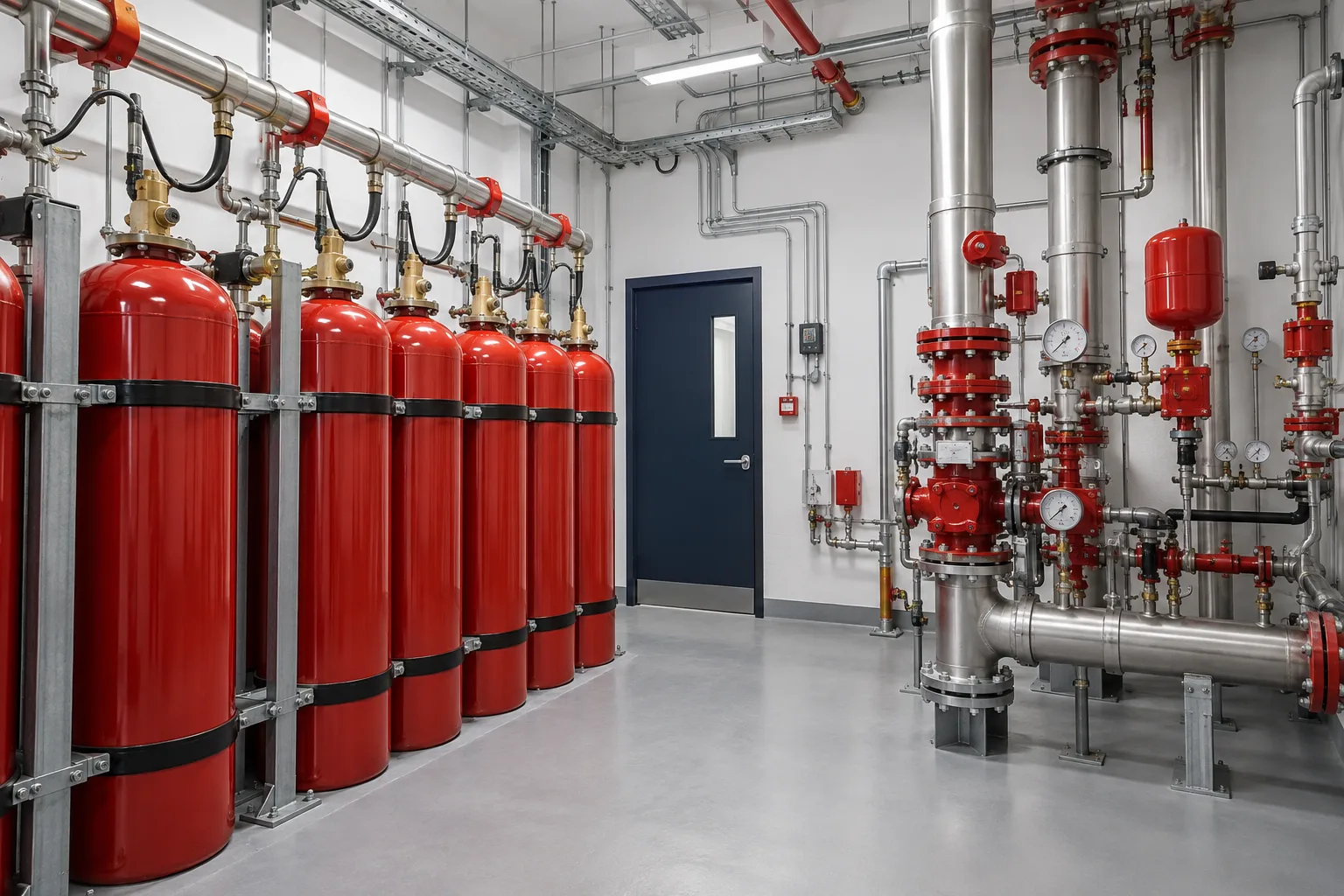
Water is highly effective for many ordinary combustible fires and gives cooling that helps prevent re-ignition. Foam is designed for defined liquid-fuel hazards. Clean agents and inert gases can protect sensitive equipment without water residue, while carbon dioxide is generally limited by the serious risk it creates for people. Aerosol can be compact, but the enclosure, residue, visibility and application approval still matter.
Choose by the tested application - not by agent name, cylinder size or a headline concentration.
The room is part of the system
Gaseous and aerosol systems depend on enclosure behaviour. Open doors, unsealed penetrations and ventilation can prevent the required concentration being held. Water and foam systems need adequate supply, drainage and control of runoff.
Record shutdowns, dampers, pressure relief, warning time and the sequence that must happen before discharge.
- Confirm the design concentration or discharge density
- Identify all openings and ventilation states
- Check pressure-relief and structural implications
- Plan abort, manual release, lock-off and reset
Plan the day after a discharge
A technically suitable system can still be a poor operational choice if refill, cleanup or specialist support is unavailable. Ask who can inspect the cylinders, replace actuators, refill the agent and recommission every interface.
Where a system is taken out of service, agree temporary protection and a controlled impairment process.
Common suppression families
| System | Strong fit | Main trade-off |
|---|---|---|
| Sprinkler / water | Broad building protection and cooling | Water impact, supply and drainage |
| Water mist | Tested machinery or enclosure applications | Application-specific test basis and nozzle hydraulics |
| Foam | Defined flammable-liquid hazards | Concentrate compatibility, environmental impact and disposal |
| Clean agent / inert gas | Enclosed rooms and sensitive assets | Room integrity, pressure relief and refill availability |
| Aerosol | Compact, tested enclosure applications | Visibility, residue, hot discharge and approval coverage |
| CO₂ | Unoccupied industrial hazards | Life-safety risk and strict access controls |
Project Checklist
Fuel, fire class, room volume, openings and any process that can restart the fire.
Occupancy, evacuation time, agent exposure and manual-release arrangements.
System test basis, component approvals and the authority or insurer that must accept it.
Cleanup, refill availability, downtime and protection while the system is offline.
Frequently Asked Questions
Is clean agent always best for a data centre?
Not automatically. It avoids water residue, but enclosure integrity, battery hazards, ventilation, occupied-space rules and local acceptance must still be resolved.
Official references
Information is based on reviewed sources and our experience at the date shown. Use it at your own risk and verify current codes, certificates and project conditions. Report an issue or suggest a correction.