

What to Know First
Organize initiating events, outputs, interfaces, timing, reset and test requirements.
- List every initiating event against every required output in one controlled matrix.
- Separate alarm, pre-alarm, fault, supervisory, isolation and manual behaviour.
- Include delays, feedback, latching, reset and failure states.
What the matrix is for
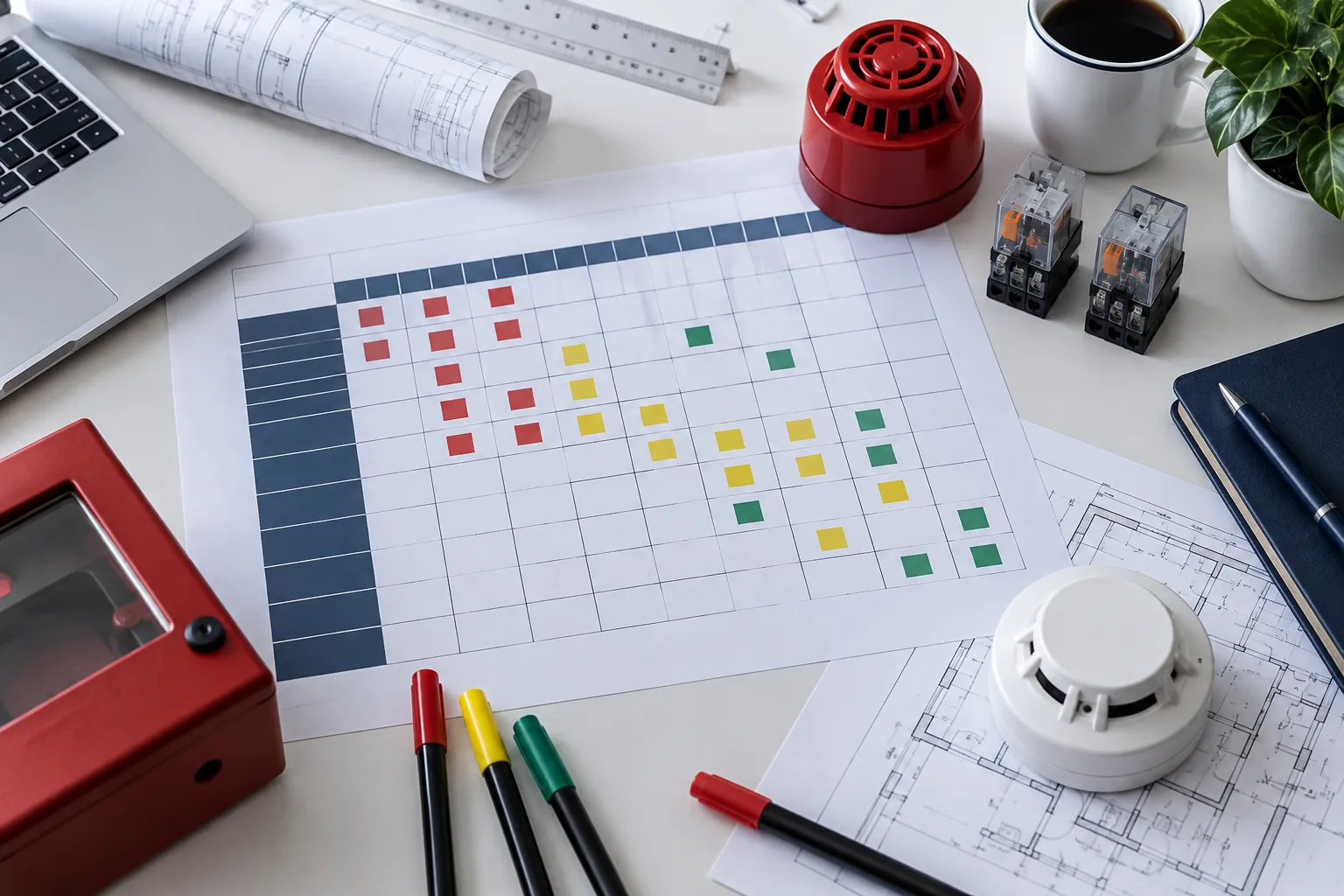
A cause-and-effect table shows what your system should do when an event occurs. For example, a detector alarm may trigger sounders or close a fire door. Each row lists an event, and the columns show the actions you can test.
Use plain labels that match drawings, panel text and physical equipment.
Include the cases people forget
Do not document only a confirmed fire. Include pre-alarm, fault, disabled points, power loss, manual override, abort, feedback failure and restoration.
State whether delays restart, cancel or continue when a second event occurs.
- Normal, alarm, fault and supervisory states
- Automatic and manual initiation
- Coincidence and cross-zone logic
- Feedback timeout and failed response
- Silence, reset and post-discharge actions
Make it the test script
Assign a unique test reference to each row. During integrated testing, record the actual time and result for every output, including local indication and remote monitoring.
Revise the matrix when software, devices or interfaces change.
Project Checklist
Devices, zones, release panels, manual controls and external systems.
Sounders, lifts, doors, fans, dampers, suppression and notifications.
Timing, coincidence, priority, feedback, latching and reset.
Witness steps, expected indication, revision and sign-off responsibility.
Frequently Asked Questions
Who should own the cause-and-effect matrix?
The responsible designer should control the approved intent; the integrator configures it and the project team witnesses the result.
Official references
Information is based on reviewed sources and our experience at the date shown. Use it at your own risk and verify current codes, certificates and project conditions. Report an issue or suggest a correction.