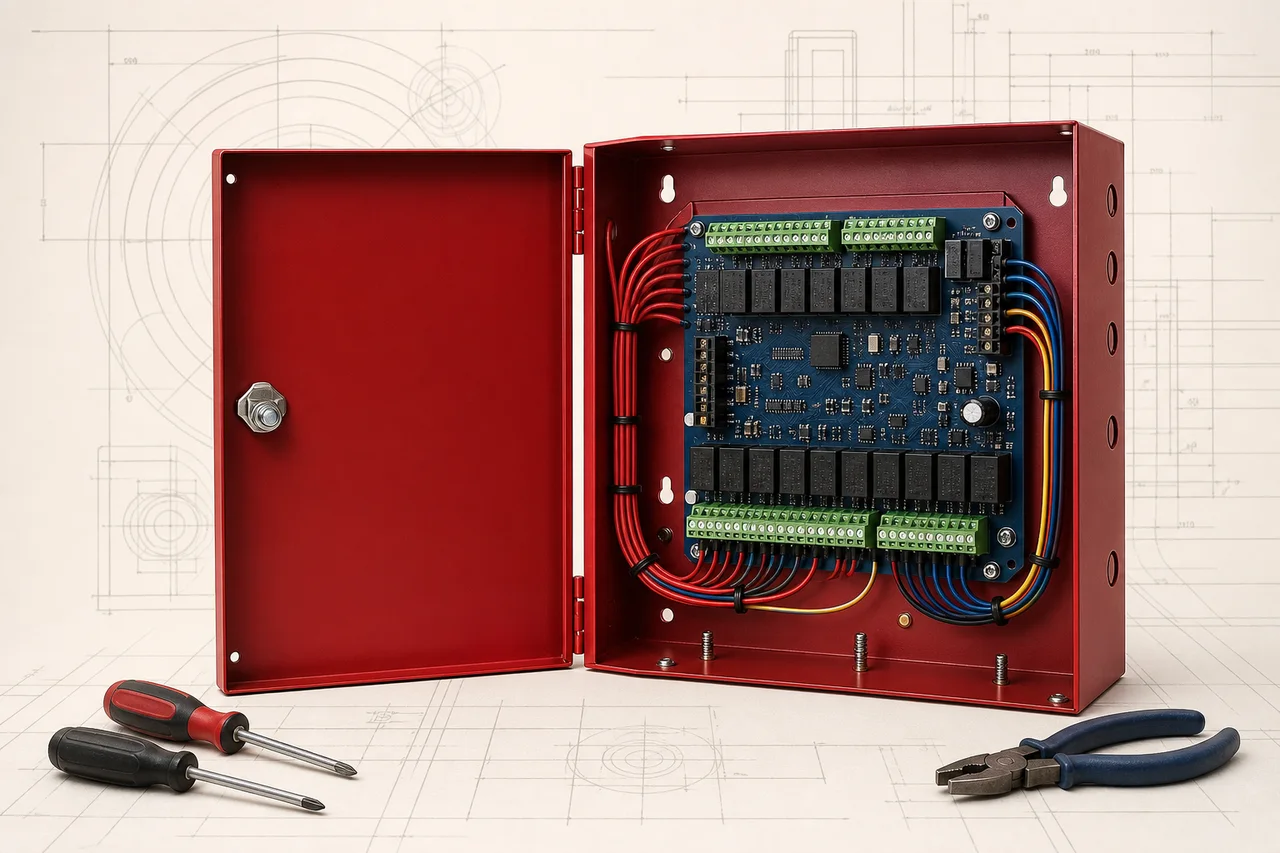
Relay interface PCBs
Dry-contact, monitored and powered interface arrangements.

 Armstrong System
 is Alarm Supply's in-house industrial range for fabricated panels, relay PCBs and interfaces used to integrate safety systems.
SingaporeSingapore
Dry-contact, monitored and powered interface arrangements.
Project-specific integration around aerosol release systems.
Enclosed assemblies built to an agreed I/O and test schedule.
Defined signal conversion, indication and routing.
An Armstrong interface does not inherit the certification of the connected fire or suppression system unless its own certificate includes that approval.
How the products connect, where they work and what maintenance they need.
Interfaces are designed from a functional description, I/O schedule, electrical ratings and fail-safe state.
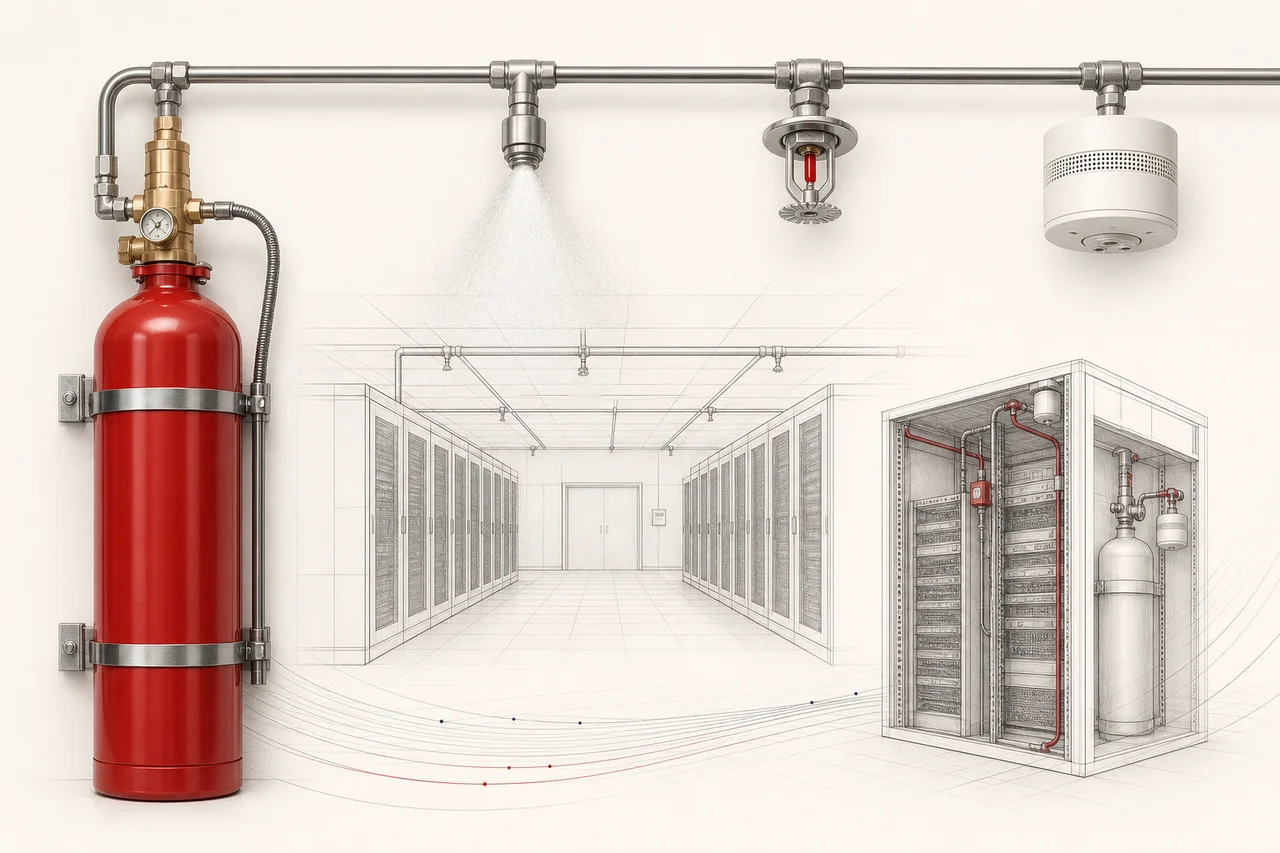
Relay-panel PCBs can provide controlled interconnection between suppression, alarm, shutdown and building systems.
Documentation, labelling, test records and replaceable-component strategy are treated as part of the deliverable.


Manufacturer data sheets, product information and certificates.
Contact our team for availability, delivery and support options in your country.
The original catalogue listed Precept and CB200 conventional panels, Series 65 detectors, 3020ARM call points, 6024ARM bells and Sonos sounder/beacons. Share the model label and panel details when requesting help with an existing installation.
Historical catalogue information. Current availability, compatibility and approvals must be checked for the exact model.
Ask About Existing EquipmentYes. Armstrong System is ASPL's in-house industrial brand for selected fabricated products, PCBs and system interfaces.
Potentially. We first define the functional requirement, ratings, environment, quantities, documentation and approval boundary.
It can affect the system approval boundary. The interface must be reviewed against the system listing, authority requirements and responsible designer's acceptance.
Send a description of what the panel must do, a list of inputs and outputs, supply voltages and installation conditions. Include drawings, quantities and any required tests.
An appropriately designed interface may do this. The design must account for isolation, load ratings, circuit monitoring and what happens if power or a signal is lost.
Agree the wiring diagrams, terminal schedule, component list, operating instructions and test records before manufacture. These documents help with installation and future repairs.