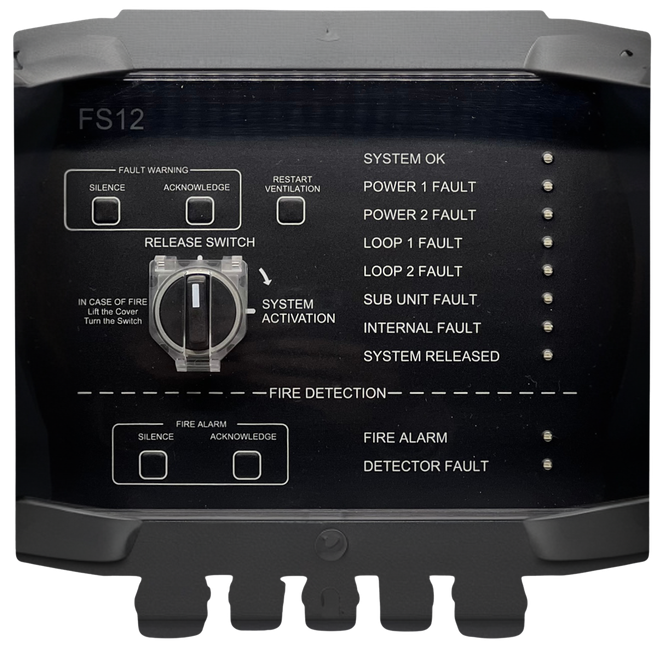
FS12 Main Unit
Operator interface and central supervision for the fixed aerosol control system, including manual release, alarm acknowledgement and status indication.
Explore FS12 Main Unit Ask about this range
 JKE Solutions
Supervise fixed aerosol systems and give operators a defined, manual release sequence.
JKE Solutions develops control and monitoring equipment for fire-extinguishing systems. FS12 coordinates fixed aerosol installations on vessels, supervising power and connected circuits while controlling the release sequence. JKE supplies the control platform; detectors and aerosol generators must be selected and verified separately.
Meet the manufacturer
Operator interface and central supervision for the fixed aerosol control system, including manual release, alarm acknowledgement and status indication.
Explore FS12 Main Unit Ask about this range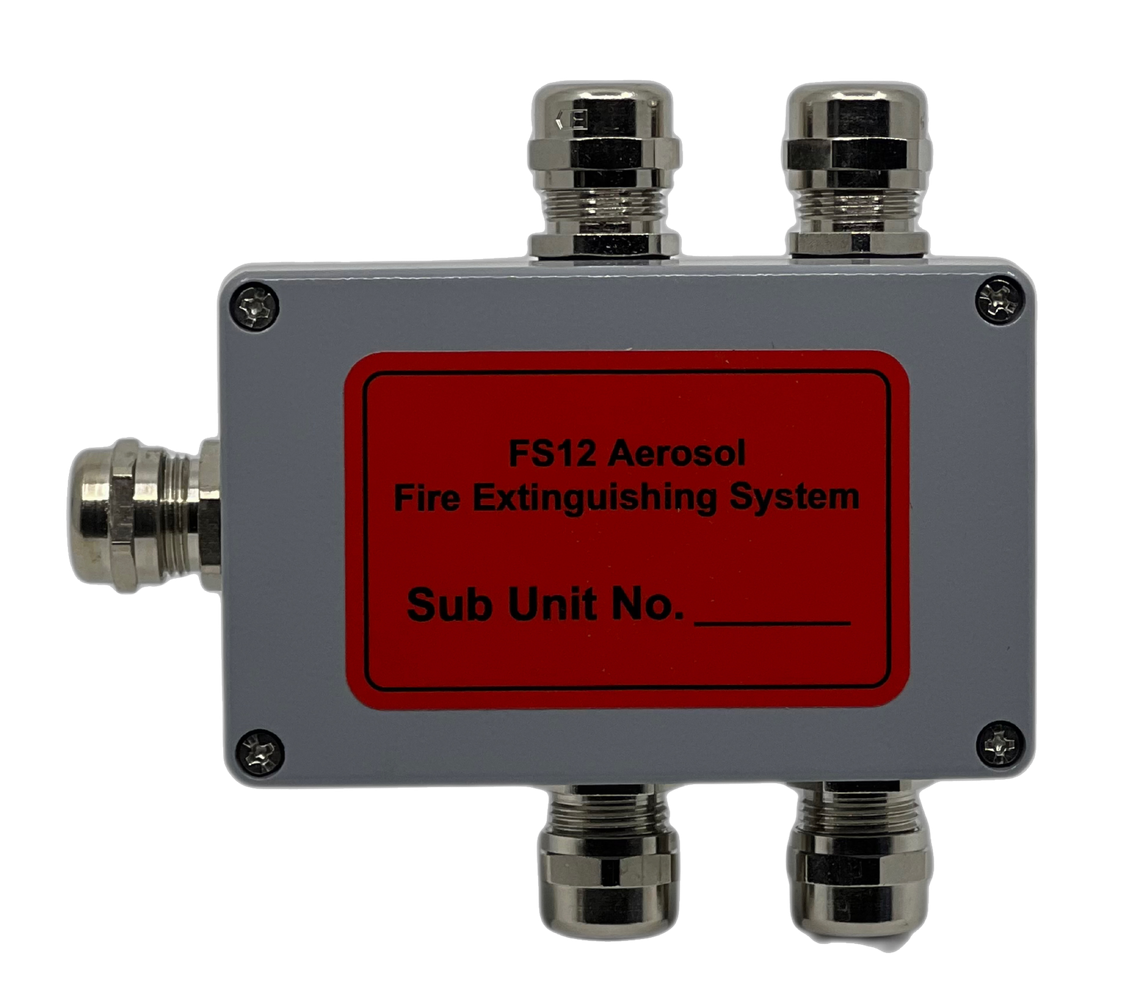
Distributed connection and monitoring for the extinguishing installation. Match subunit variants, circuit loading and wiring to the approved design.
Explore FS12 Subunit Ask about this rangeFS12 uses manual release. Detection, warnings and operator actions must be defined together; a detector alarm must not be presented as an automatic discharge command.
The manufacturer specifies two independent 24 V DC supplies. Plan supervision, cable routing and fault indication for both supplies.
FS12 supports up to 50 subunits. The permitted generator loading and circuit arrangement depend on the subunit, wiring and selected extinguishing equipment.
Document pre-release warning, ventilation shutdown, activation and state verification. Commission the complete sequence with the vessel team.
JKE describes FS12 as DNV type approved for IMO-based marine applications. Request the current certificate, approved configuration and vessel acceptance documents. IMO requirements are a design basis, not a blanket approval of every connected device.
No. JKE specifies manual release for FS12. Detection and fault monitoring support the operator and release sequence, but must not be described as automatic aerosol discharge.
The platform supervises power supplies, detector circuits, activation loops and external control inputs. Circuit faults and voltage deviations are monitored and recorded.
JKE specifies up to 50 subunits. Confirm cable topology, circuit loading and the supported hardware configuration before designing to that limit.
JKE develops the control and monitoring platform and does not manufacture the detectors or aerosol generators. These need a separate compatibility and system-approval assessment.
The manufacturer specifies two independent 24 V DC supplies. Confirm the voltage tolerance, load and supervision arrangements in the current datasheet.
FS12 is the marine platform described for IMO-based fixed aerosol installations and manual release. FS10 serves different, smaller applications; its operating modes and limits must not be transferred to FS12.
The overall design may coordinate detection, warnings, ventilation and suppression through supported interfaces. Confirm signal types, isolation and cause-and-effect; do not assume direct Apollo loop compatibility.
Provide the circuit schedule, generator and detector references, power design, release sequence, ventilation interfaces and vessel acceptance criteria. The manufacturer offers a circuit tester for supported checks.
Send the full part number and clear photographs of the equipment label. Include the equipment it connects to and describe any changes to the installation. This helps distinguish versions that look alike.
Include the model or specification, quantity, delivery country and required date. Attach any required certificates or drawings so the proposed item can be checked before you order.
Send the protected-space drawings, extinguishing equipment list, vessel class requirements and delivery location. We will help define the control and commissioning scope.