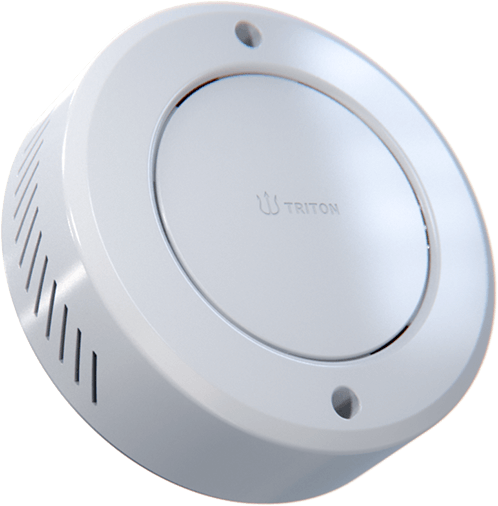
Triton Ultra
Vape, THC, air-quality and supported safety-event sensing.

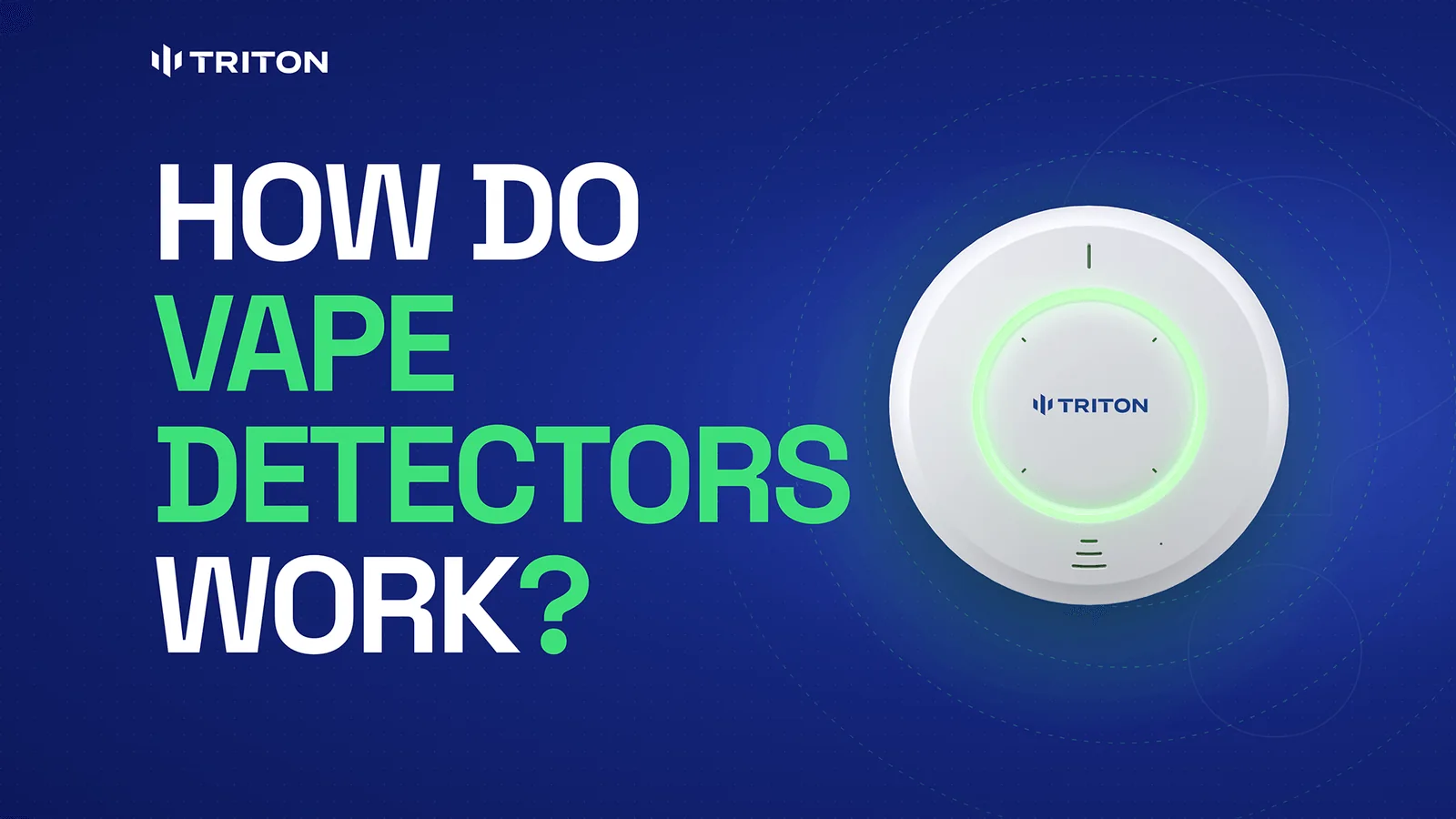
Triton Sensors develops privacy-oriented vape, air-quality, occupancy and ambient-safety sensors with cloud-managed alert workflows.
United StatesPennsylvania, United States
Vape, THC, air-quality and supported safety-event sensing.
Radar- or sensor-based occupancy workflows by model.
Device management, alerts, records and integrations.
Supported keyword, sound and third-party notification workflows.
Cybersecurity assessments and fire-product certificates cover different requirements.
How the products connect, where they work and what maintenance they need.
Triton describes its platform as camera-free and privacy-first, using environmental, acoustic and radar inputs by model.
Triton Cloud manages devices, thresholds, alerts and reporting; network resilience and response ownership must be planned.
Available functions vary by sensor generation, so event requirements should be mapped to the exact hardware and subscription.


Manufacturer data sheets, product information and certificates.
Contact our team for availability, delivery and support options in your country.
Triton presents the platform as camera-free. Document which acoustic or occupancy functions are enabled and how privacy notices are handled.
Coverage depends on model, room geometry, airflow and installation height. Use the current planning guidance rather than a generic area assumption.
No such blanket claim should be made. Keep code fire detection separate unless an exact product listing explicitly says otherwise.
Confirm the model’s power, network and service requirements with the IT team. Agree account access, update responsibility and any subscription costs.
Choose staff who can respond to the event and define a backup contact. Test the notification route rather than assuming a dashboard entry will be noticed.
Record the room layout, airflow and normal activities. Review detected events and unwanted alerts with the supplier before deciding on placement or a wider rollout.