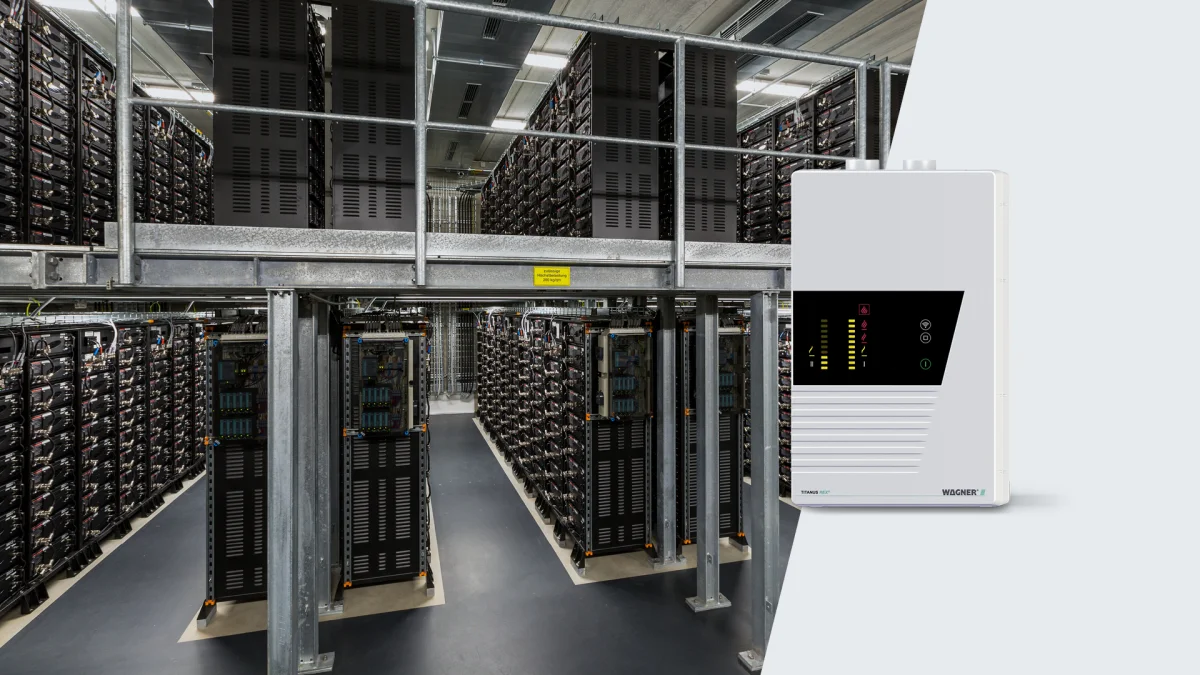
TITANUS REX
New-generation detection with staged alarms and digital planning and service tools.
Explore TITANUS REX Ask about this range
 Wagner · TITANUS
Air-sampling detection for rooms, warehouses and equipment cabinets.
TITANUS samples air through a network of pipes to detect developing smoke. Choose the detector, pipe layout and accessories together for the space you need to protect.
Meet the manufacturer
New-generation detection with staged alarms and digital planning and service tools.
Explore TITANUS REX Ask about this range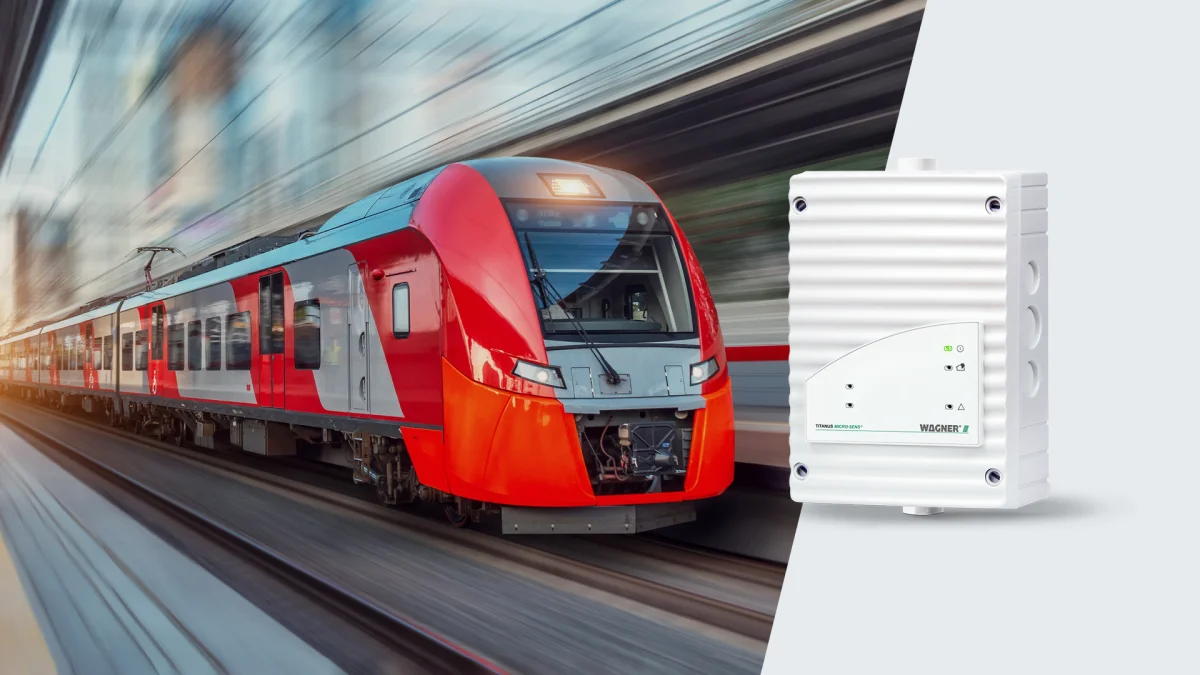
Compact air-sampling detection for smaller rooms and equipment.
Explore TITANUS MICRO·SENS Ask about this range
Modular detection for one or two monitoring areas, with specialist variants.
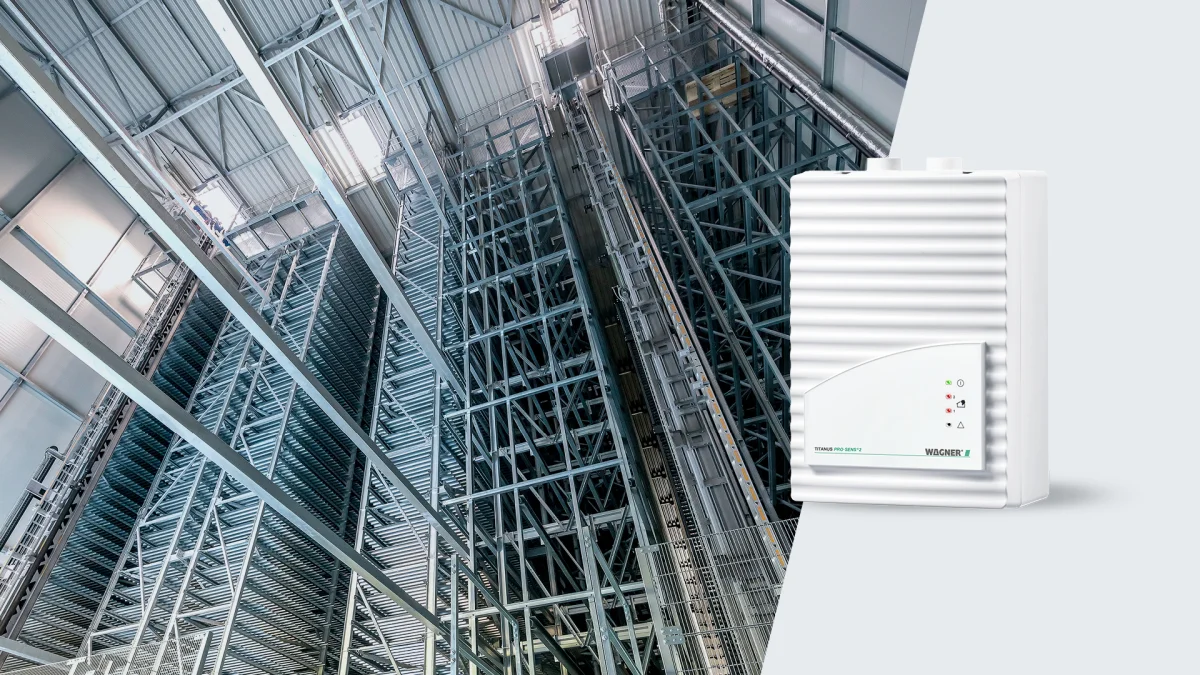
Explore TITANUS PRO·SENS Ask about this range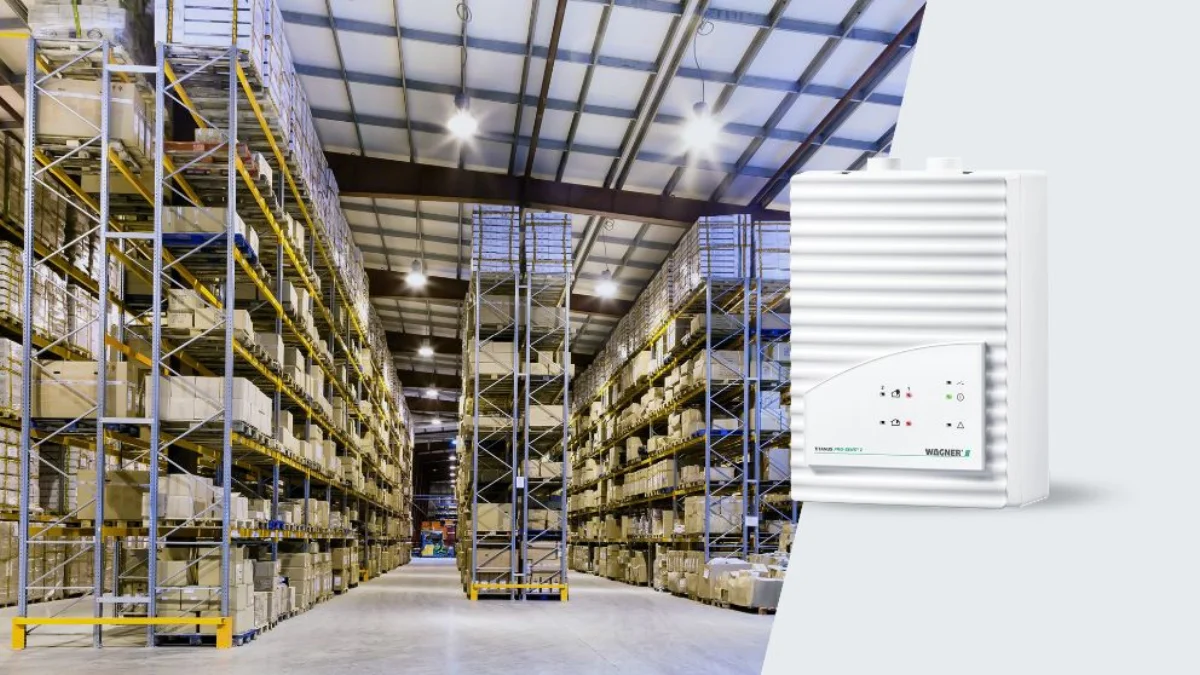
PRO·SENS with staged alarms and optional network and logging functions.
Explore TITANUS PRO·SENS /net Ask about this range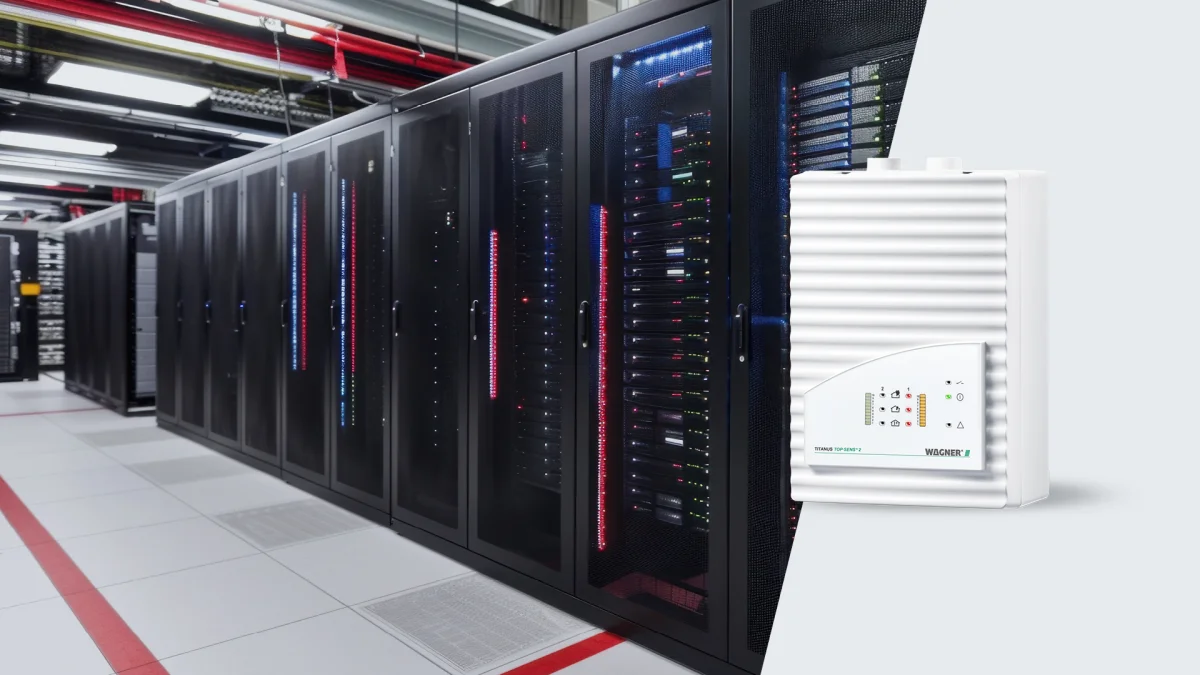
Multiple alarm levels and a smoke-level display for a clearer view of developing conditions.
Explore TITANUS TOP·SENS Ask about this range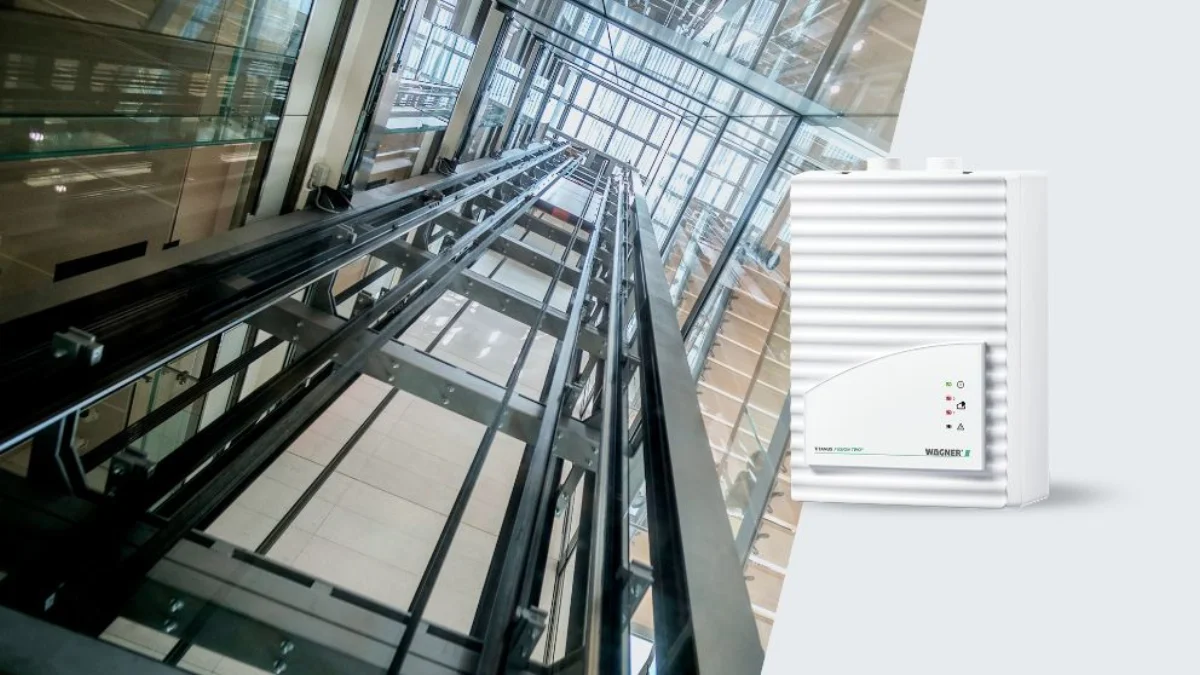
Two-channel detection for small to medium monitoring areas.
Explore TITANUS FUSION Ask about this range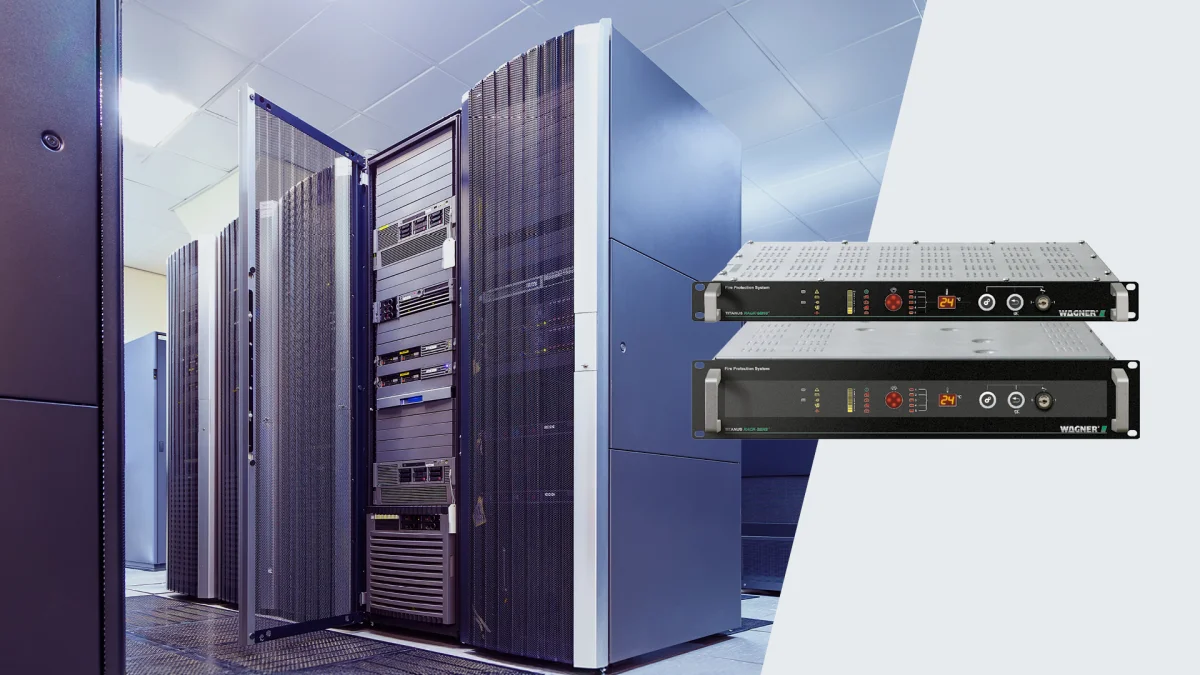
Early detection within server and control cabinets, with suppression options in the range.
Explore TITANUS RACK·SENS Ask about this rangeChoose an application to see what to check before specifying a TITANUS system.
Consider MICRO·SENS for smaller spaces and the larger TITANUS families where more monitoring channels or alarm stages are needed. Check airflow and sampling-point positions before choosing a model.
High ceilings, racks and ventilation affect smoke movement. Review PRO·SENS, TOP·SENS or REX with the designer, then validate the pipe network in the appropriate Wagner planning software.
Use a suitable deep-freeze variant and plan for condensation, filtration and changes in temperature. The detector and pipe network must be assessed together.
RACK·SENS is designed for server and control cabinets. Review the cabinet airflow, connected enclosures, alarm interfaces and whether a detection-only or suppression configuration is required.

Position sampling points with the airflow, ceiling height and room layout in mind.
Use the right detector variant, filters and condensation measures for the environment.
Plan accessible test points and space to inspect the detector, filters and pipe network.
Approvals and design limits depend on the detector variant, pipe network and region. Use the current datasheet and certificate for your project.
TITANUS TOP·SENS cold-storage variants are rated down to −40°C. Select the matching detector modules and pipe design.
Manufacturer DetailsOxygen-reduction systems for fire prevention in suitable protected spaces.
Explore RangeGas fire suppression for rooms and equipment.
Explore RangeCentral monitoring of fire and other safety systems.
Explore RangeAsk us about availability and the model requirements for your project.
Meet WAGNER
A fan draws air through sampling holes in a pipe network. The detector analyses that air for smoke and sends alarm or fault signals to the connected system.
Start with the space, environmental conditions, alarm stages and monitoring requirements. MICRO·SENS suits smaller areas; other families add monitoring channels, displays, connectivity or cabinet protection. Confirm the exact configuration with the design team.
Wagner offers deep-freeze variants and application-specific accessories. Temperature changes, condensation and pipe routing must be considered together; a standard indoor model is not automatically suitable.
Connection depends on the detector variant, relay outputs, interface modules and panel requirements. Share both model numbers so the alarm, fault and any network interfaces can be checked.
No. Pipe length, sampling holes, airflow, transport time and required detection sensitivity all affect the design. Use the appropriate Wagner planning software and the approved design method for the selected detector.
PRO·SENS offers modular monitoring. TOP·SENS adds multiple alarm stages and a smoke-level display. PRO·SENS /net also offers additional alarm and connectivity options; compare the exact variants rather than the family name alone.
REX is Wagner’s newer aspirating detection platform. It uses W1 sensing technology and works with PipeXpress PLUS and ServiceXpress. Check regional availability, approvals and the required configuration.
Send floor plans, ceiling heights, room use, airflow conditions, temperature range, fire-panel details and required approvals. For an existing system, include the detector label and pipe layout.
Share the room layout, environmental conditions and fire-panel details. We can help identify the range and documents to review.