

What to Know First
Separate IS and Ex protection concepts, labels and application limits.
- Intrinsic safety limits energy; flameproof or explosion-proof protection contains an ignition.
- Neither phrase alone proves suitability for a hazardous area.
- Zone, material group, temperature class, EPL and installation must all match.
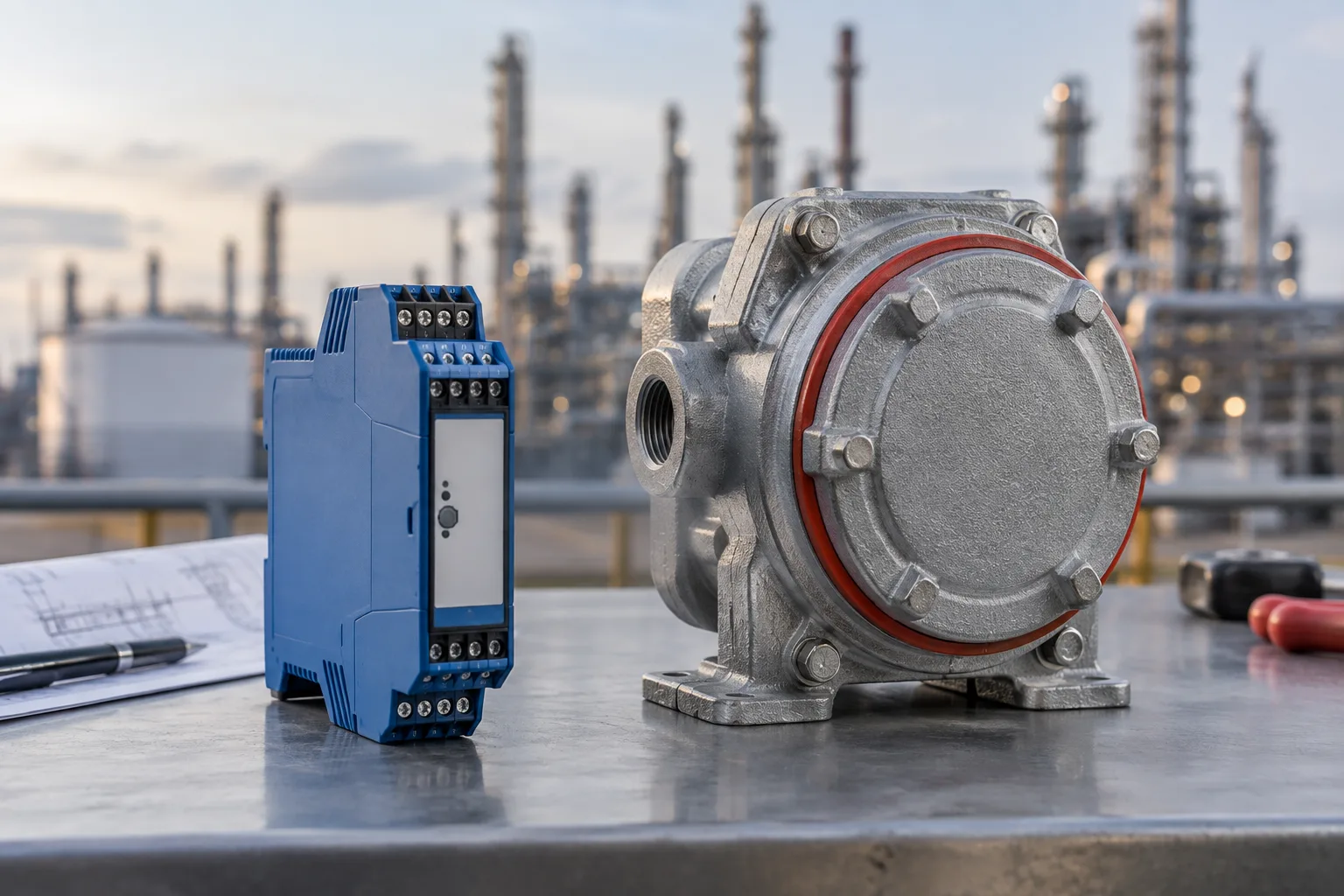
Two different protection strategies
Intrinsic safety limits electrical and thermal energy so a circuit cannot ignite the stated atmosphere under defined fault conditions. Flameproof protection allows an internal explosion but contains it and cools escaping gases through engineered joints.
Other Ex concepts include increased safety, pressurisation, encapsulation and protection by enclosure for dust.
The complete loop matters
An intrinsically safe field device is only part of an IS loop. The barrier, cable parameters, earth arrangement and all connected apparatus must satisfy the certificate and system calculation.
A flameproof enclosure depends on correct glands, threads, bolts and flame paths. Damage or unauthorised machining can invalidate protection.
- Match equipment protection level to the zone
- Check entity parameters for every IS device
- Use certified cable entries and stopping plugs
- Keep certificate ‘X’ conditions with the equipment record
Use the right language
‘Explosion-proof’ is commonly used in North American systems. ‘Flameproof Ex d’ is an IEC protection concept. They are related ideas but should not be treated as automatically interchangeable.
The equipment needs to suit your hazardous-area classification and meet local approval requirements.
Project Checklist
Gas or dust, zone/division and the hazardous material present.
Ex concept, equipment protection level and category.
Gas/dust group, temperature class and ambient range.
Barriers, entity parameters, glands, earthing and certificate conditions.
Frequently Asked Questions
Is intrinsic safety safer than flameproof protection?
Not in the abstract. Each is suitable for defined equipment, zones and installation conditions; the complete certified arrangement must match the hazard.
Official references
Information is based on reviewed sources and our experience at the date shown. Use it at your own risk and verify current codes, certificates and project conditions. Report an issue or suggest a correction.