

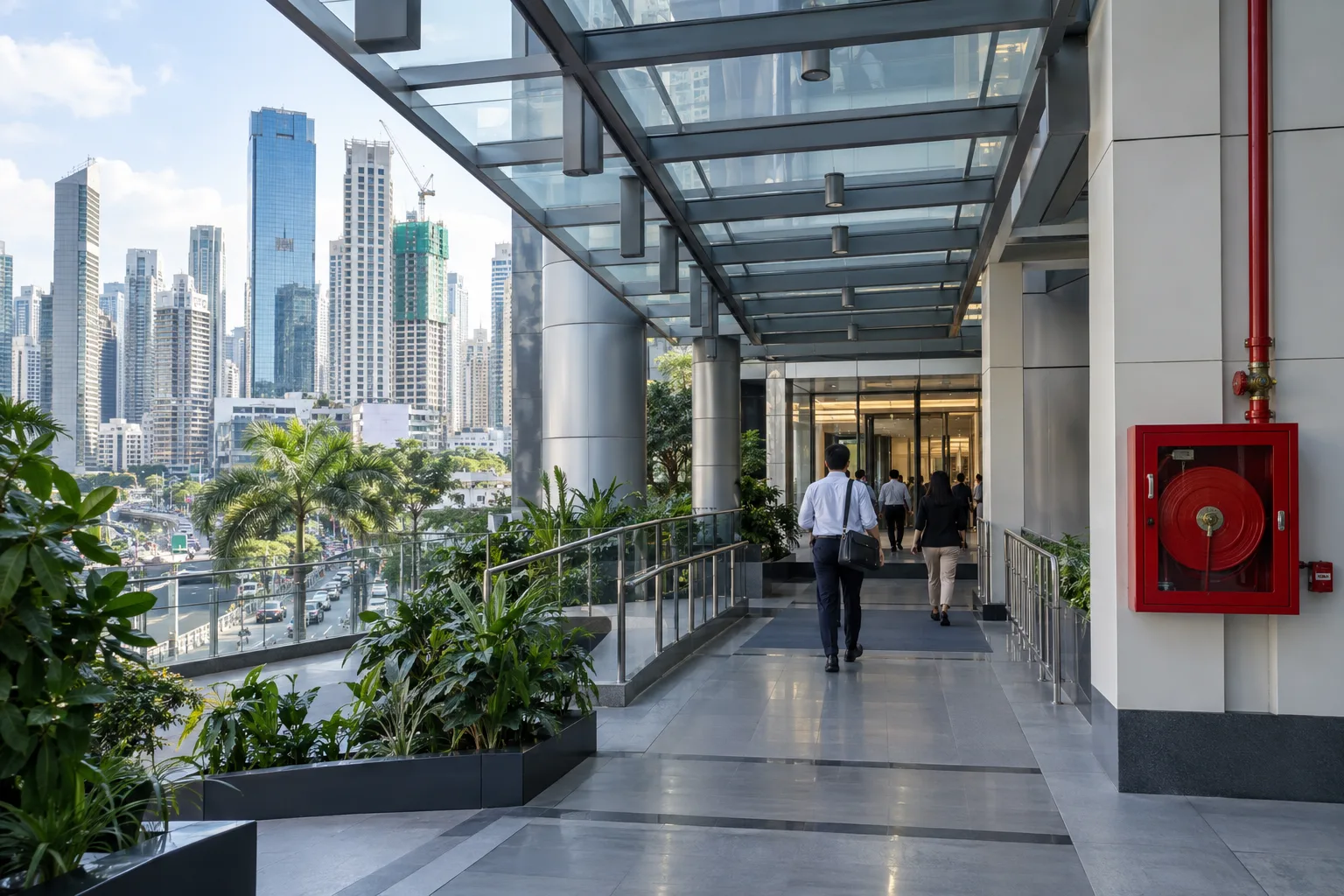
Philippines Fire Safety Requirements
Questions to clarify with authorities, consultants and project stakeholders.
- Establish the Bureau of Fire Protection and local permit requirements before equipment selection.
- Coordinate fire design with building, electrical, mechanical and occupancy requirements.
- Keep the product certificates and handover records required where your system is installed.
Obtain BFP Fire Safety Evaluation Clearance Before Construction
The Bureau of Fire Protection reviews plans and specifications for Fire Safety Evaluation Clearance in the building-permit process. A Fire Safety Inspection Certificate is then tied to inspection and is required in relevant occupancy and business-permit processes.
Confirm the exact local procedure and current forms with the city or municipal fire marshal.
Coordinate Fire Alarm, Sprinkler and Building Interfaces
Fire alarm, sprinklers, pumps, smoke control, lifts, emergency power and voice evacuation cross several disciplines. Put the required cause-and-effect on coordinated drawings rather than leaving it to site wiring.
Identify the code or standard used for every major system.
- Approved drawings and calculations
- Exact equipment schedules and certificates
- Interface matrix and test scripts
- As-built drawings, training and maintenance records
Prepare for BFP Inspection and the Fire Safety Inspection Certificate
The FSIC does not replace other licences and changes in occupancy can trigger new requirements. Building owners need clear procedures for inspection, testing, system isolation and repair after turnover.
Record who receives faults and who has authority to isolate equipment.
Philippines Fire Safety Project Checklist
Confirm whether the project needs Fire Safety Evaluation Clearance, installation clearance or a Fire Safety Inspection Certificate.
Name the responsible designers, fire safety practitioner, contractors and Bureau of Fire Protection office.
Coordinate Fire Code requirements, calculations, equipment schedules and approved plans.
Prepare test results, as-built drawings, maintenance records and the documents required for inspection.
Frequently Asked Questions
What is the difference between an FSEC and an FSIC?
The Fire Safety Evaluation Clearance is part of the plan review stage. The Fire Safety Inspection Certificate follows inspection of the completed premises and is used for occupancy or business-permit requirements.
Does an FSIC replace the business permit?
No. A Fire Safety Inspection Certificate supports the permit process but does not replace licences required by law.
Who reviews fire safety plans in the Philippines?
The Bureau of Fire Protection reviews the fire safety documents through the city or municipal fire marshal as part of the local permitting process.
Can construction start before the fire safety plans are cleared?
The required fire safety plans and Fire Safety Evaluation Clearance should be handled with the building-permit documents before the related installation work proceeds.
What should be prepared for the BFP inspection?
Prepare the approved plans, equipment schedules, installation and test records, as-built drawings and access to every system that must be witnessed. Alarm Supply can help prepare product schedules and technical documents. Contact us to discuss your project.
Do renovations or a change of use affect the fire requirements?
They can. Changes to the layout, occupancy or hazard may require updated plans, equipment and a new Bureau of Fire Protection review.
Official references
Information is based on reviewed sources and our experience at the date shown. Use it at your own risk and verify current codes, certificates and project conditions. Report an issue or suggest a correction.