

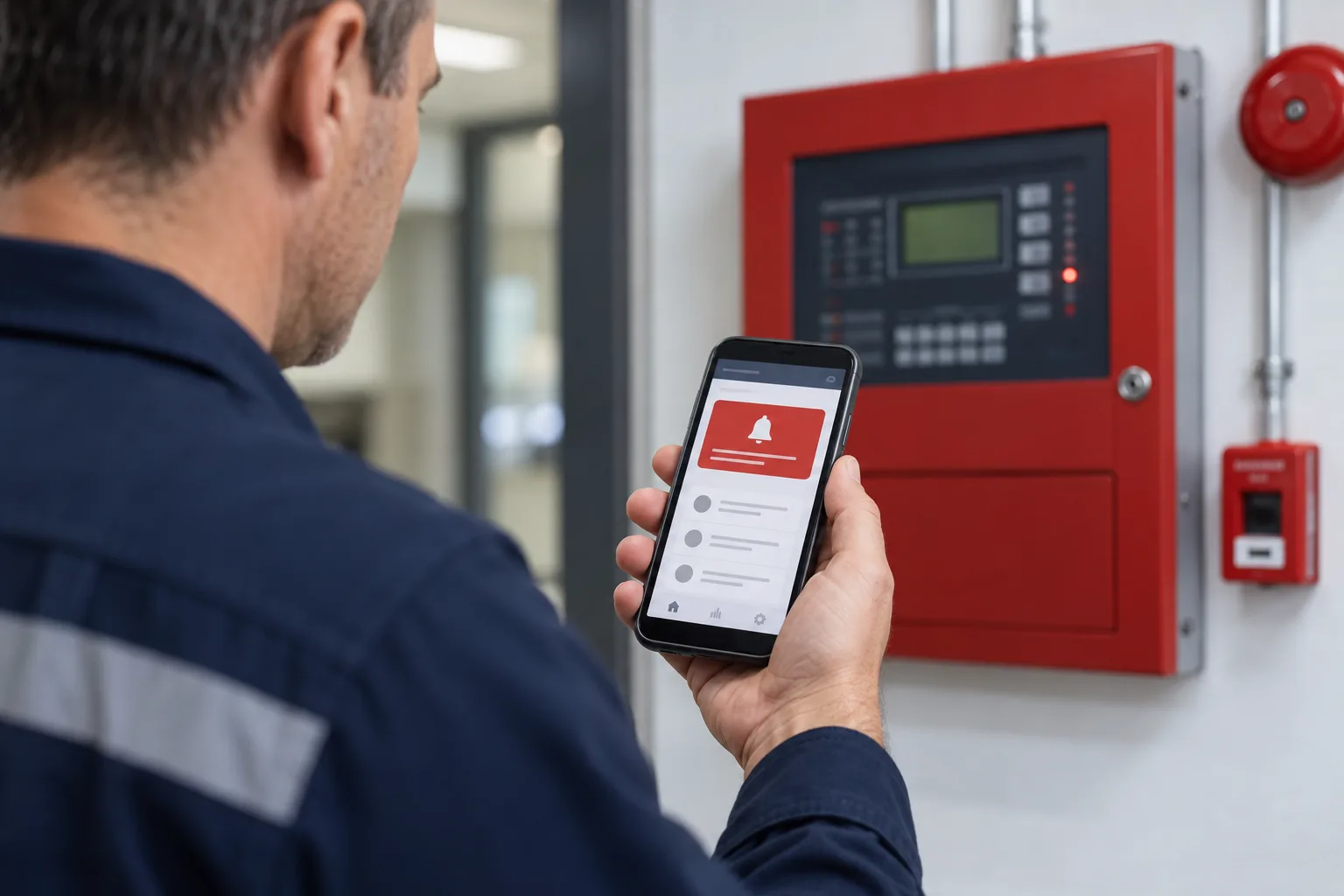
What to Know First
How mobile alerts, facilities workflows and visitor notification can complement core systems.
- Remote alerts complement the primary fire system; they do not replace required monitoring.
- Define which alarm, fault, supervisory and isolation events are transmitted.
- Connectivity failure, acknowledgement and escalation must be visible and testable.
What remote monitoring is good at
Remote monitoring can help facilities teams see faults, isolations and alarms sooner, especially across several sites. It can provide event history, maintenance context and visitor or duty-team notification.
Changes to fire-system settings need authorised access and a record of who changed what.
Design the message, not only the connection
An alert should name the site, panel, event type and area clearly. The receiver needs a defined action and escalation time.
Avoid sending every minor event to everyone; uncontrolled alert volume trains people to ignore the system.
- Alarm: who responds immediately
- Fault: technical response and time target
- Isolation: who approves it and restores the system
- Connectivity loss: visible local and remote fault
- Test event: clearly identified and closed
Secure the gateway
Segment connected devices, use individual accounts and multi-factor authentication where supported, remove default credentials and maintain supported software. Record data hosting and retention.
Test operation during internet failure and after software updates.
Project Checklist
Panel protocol, approved gateway and separation from life-safety control.
Primary and backup path, outage indication and recovery.
Recipients, acknowledgement, escalation and out-of-hours ownership.
Accounts, encryption, software support, retention and audit logs.
Frequently Asked Questions
Can a mobile app replace a supervising station?
No, if your local authority or fire code requires a recognised supervising station. You can use an app for extra updates, but it does not remove that requirement.
Official references
Information is based on reviewed sources and our experience at the date shown. Use it at your own risk and verify current codes, certificates and project conditions. Report an issue or suggest a correction.