

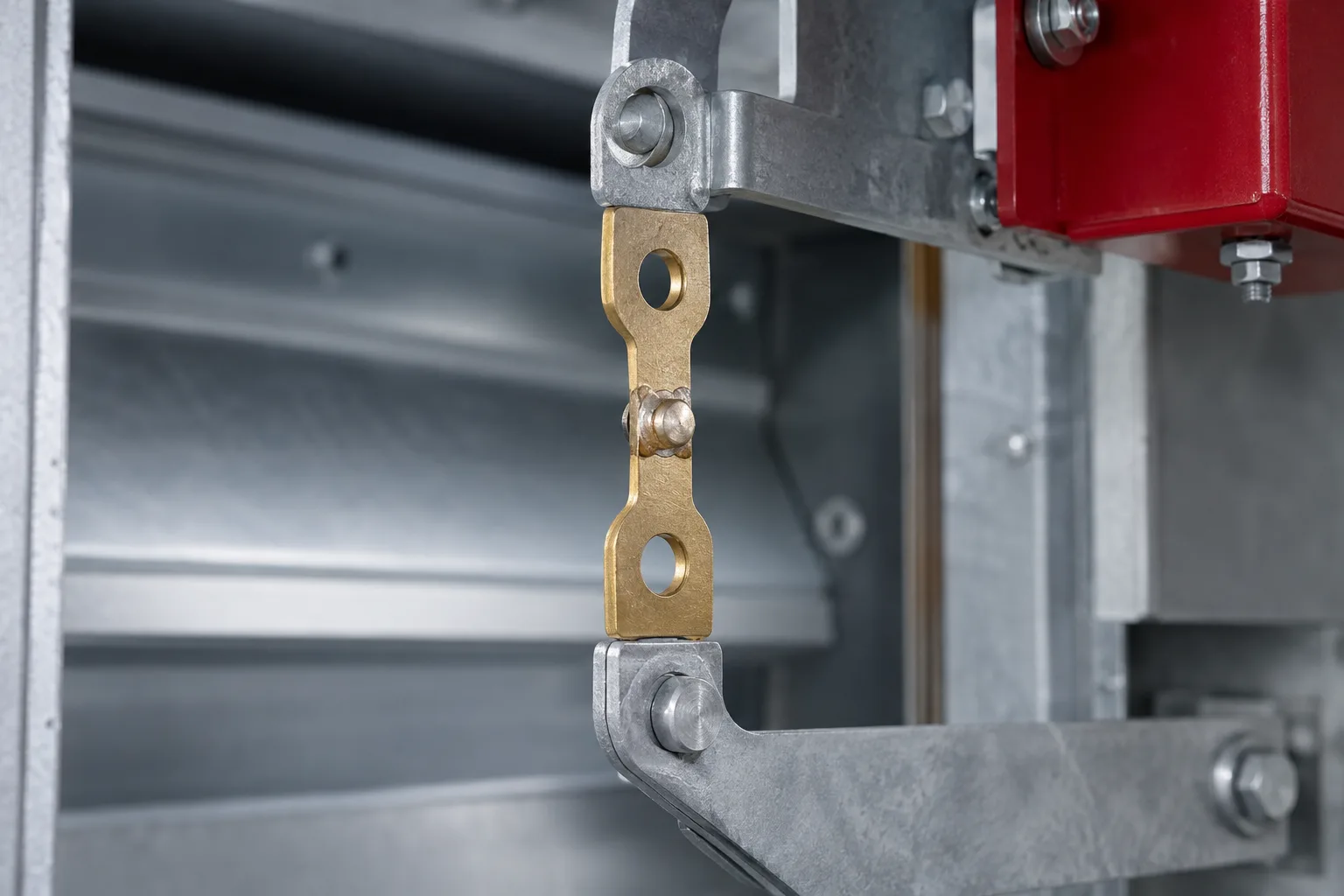
What to Know First
Where fusible links are used and what temperature, load and replacement considerations matter.
- A fusible link is a temperature-responsive mechanical release, not a general heat detector.
- Temperature rating, load, orientation and the listed assembly matter.
- Paint, contamination, damage or an incorrect replacement can change performance.
How a fusible link works
A fusible link holds a mechanical load until its heat-sensitive element separates at a rated condition. Springs, weights or gravity then move the connected equipment to its fire position.
Common uses include fire dampers, fire doors and commercial cooking suppression mechanisms.
Why the complete assembly matters
The marked temperature does not by itself prove interchangeability. The link’s load rating, geometry and approval are part of the tested assembly.
A replacement should match the equipment manufacturer’s instructions and listing.
- Never paint a fusible link
- Do not bend or file the element
- Keep the linkage free to move
- Replace after operation or when condition is doubtful
Inspection is more than looking at the link
Confirm that the controlled door, damper or release can travel fully and that nothing has been tied, wedged or altered. Grease, dust and corrosion can affect the mechanism even when the link looks intact.
Record the device location, rating and action taken.
Project Checklist
Listed assembly, damper, door, hood or other controlled mechanism.
Marked temperature compared with normal maximum ambient conditions.
Supported load, orientation, linkage and release travel.
Corrosion, paint, contamination, deformation and replacement date.
Frequently Asked Questions
Can I use a higher-temperature link to stop nuisance operation?
Not without the equipment manufacturer and authority confirming it. A higher rating delays release and may fall outside the listed assembly.
Official references
Information is based on reviewed sources and our experience at the date shown. Use it at your own risk and verify current codes, certificates and project conditions. Report an issue or suggest a correction.