

What to Know First
How dry contacts, monitored inputs, outputs and isolation affect integration.
- A relay separates control logic from the switched circuit but does not remove rating limits.
- Identify common, normally open and normally closed terminals from the exact datasheet.
- Interfaces should expose faults and unintended states where the cause-and-effect requires it.
What a relay does
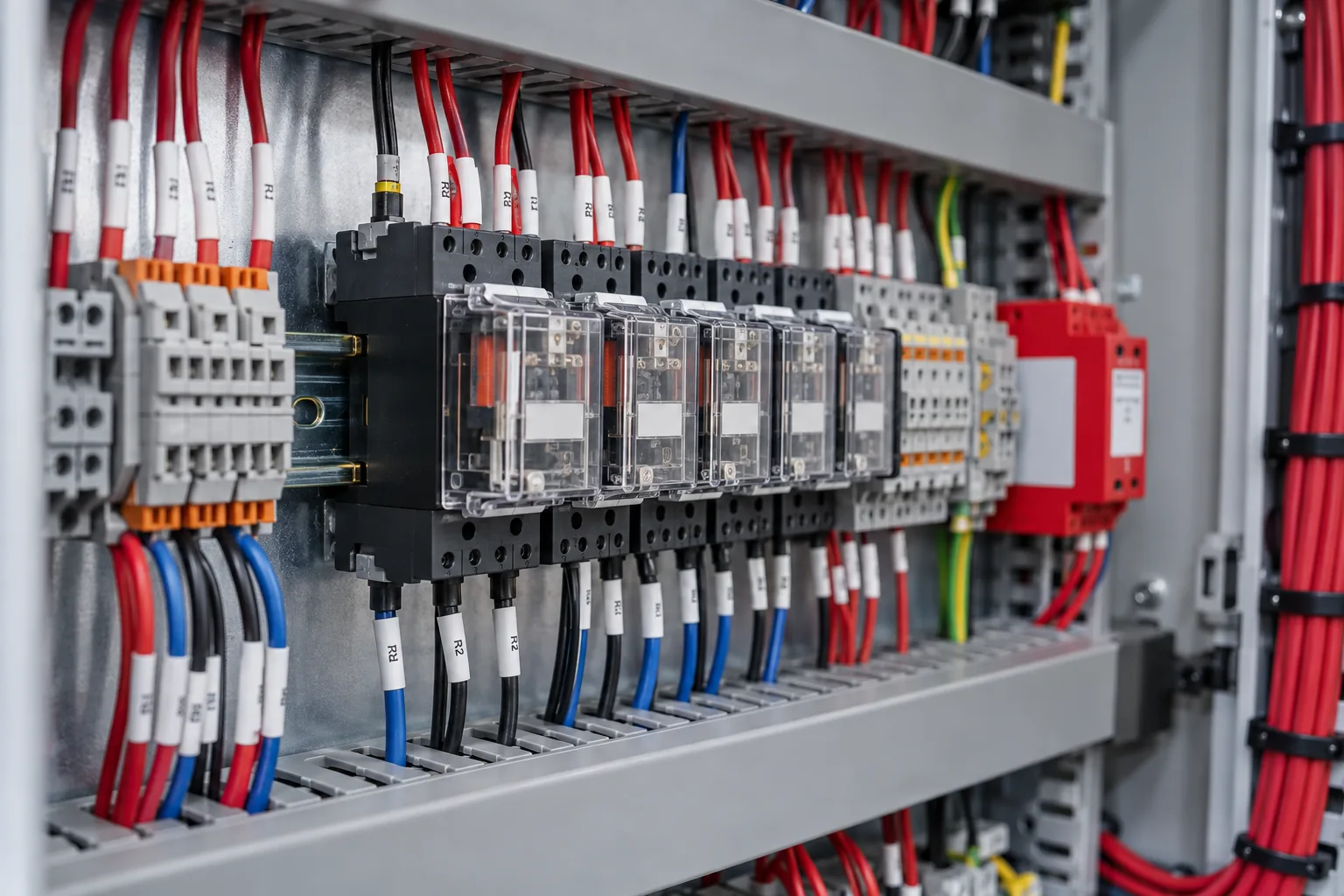
A relay uses one circuit to change contacts in another. Fire systems use relays to signal lifts, fans, dampers, access control, suppression panels and building-management systems.
A dry contact supplies no voltage of its own. The receiving system provides the sensing circuit, so both sides must agree the normal and alarm states.
An output is not proof of action
The fire panel can energise a relay without proving that a fan stopped or a damper closed. Where confirmation matters, bring a separate monitored feedback signal back from the equipment.
Document delays, latching, manual override and what the system shows when feedback does not arrive.
- Command contact
- Position or run feedback
- Fault and isolation indication
- Local override and reset
Avoid interface failures
Common problems include switching a load above the contact rating, mixing voltages without segregation, sharing a common connection that is missing from the wiring diagram, and leaving interface relays unlabelled.
Use approved interfaces where the fire-system standard requires monitored circuits or fault isolation.
Project Checklist
Voltage, current, polarity and whether the relay is normally energised.
Form, load type, electrical rating and required isolation.
Input/output supervision and feedback from controlled equipment.
Enclosure, segregation, fault response and reset behaviour.
Frequently Asked Questions
Can a fire-panel relay directly switch a motor?
Usually not. Verify the contact rating and use a suitable contactor or interposing interface designed for the load.
Official references
Information is based on reviewed sources and our experience at the date shown. Use it at your own risk and verify current codes, certificates and project conditions. Report an issue or suggest a correction.