

What to Know First
Information to provide for CO₂, FM-200 and other supported clean-agent cylinders.
- Identify cylinder, agent, fill, valve and approval before transport.
- Find why pressure or agent was lost before refilling.
- Plan temporary protection while the system is out of service.
Information the refill station needs
Send clear photographs of the full cylinder, neck and valve labels. Record the system brand, cylinder serial, agent, fill mass, pressure and last hydrostatic-test date.
For a bank, identify every cylinder position and whether a common manifold or selector valve is used.
Refill is also an investigation
A low reading may come from temperature, a leaking valve, damaged gauge or actual agent loss. A discharged cylinder may have been operated by fire, accident or failed release hardware.
Correct the cause and inspect related actuators, hoses and detection circuits before returning the cylinder.
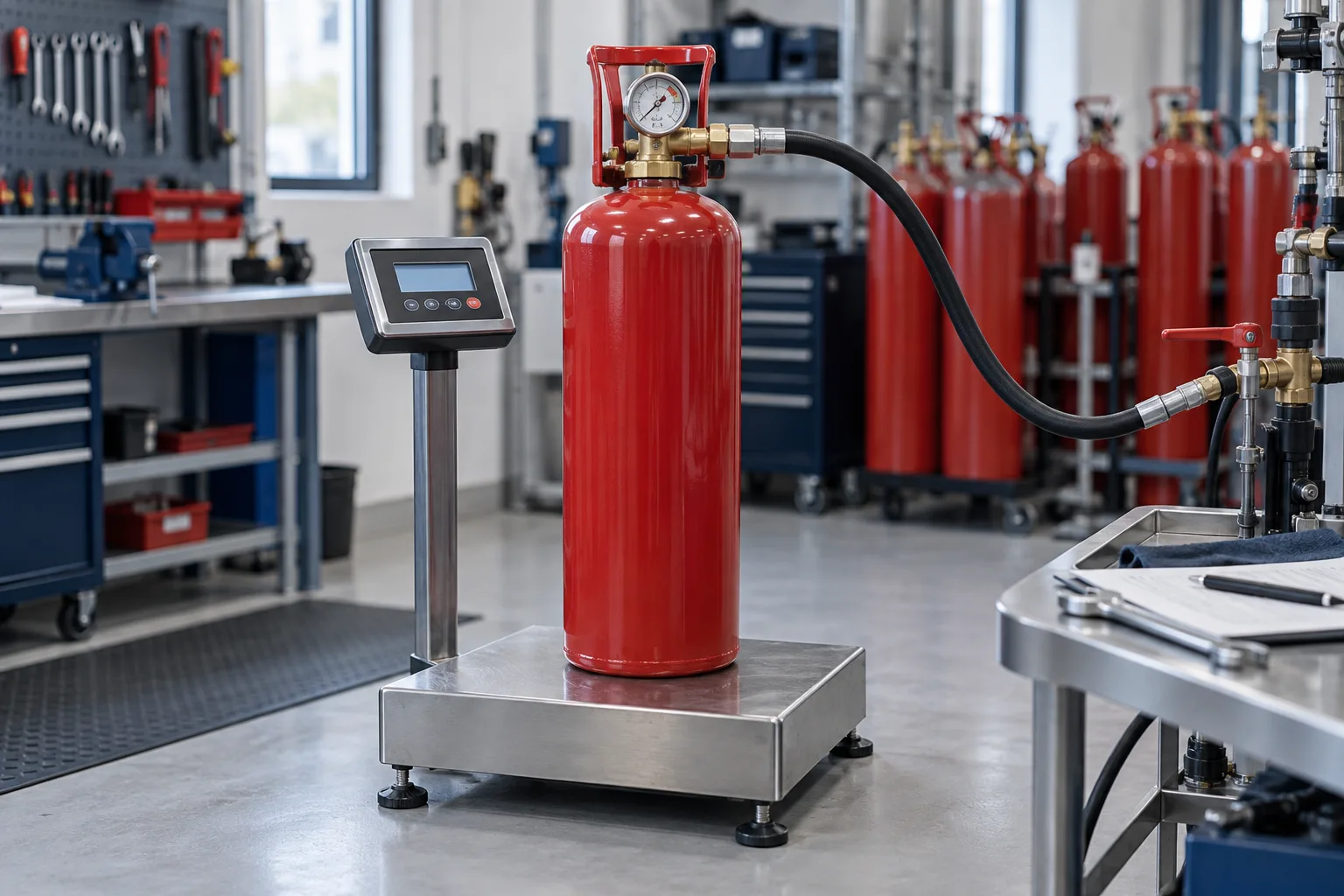
- Weigh or measure using the approved method
- Inspect valve and pressure-relief components
- Check cylinder test status
- Replace one-shot actuators and seals as required
Return the system safely
Use a documented impairment and lock-off process. After refitting, confirm cylinder restraint, hose connection, actuator alignment, electrical supervision and panel status.
Complete a controlled functional test without unintended discharge.
Project Checklist
Serial number, water capacity, working pressure and test date.
Chemical name, required fill mass and acceptable tolerance.
Valve, actuator, burst disc, siphon tube, hose and pressure device.
Isolation, transport classification, refill records and reinstatement test.
Frequently Asked Questions
Can an alternative agent be put into the same cylinder?
Only if the complete system and cylinder are approved for that agent and the manufacturer’s conversion procedure is followed. Do not assume equivalence.
Official references
Information is based on reviewed sources and our experience at the date shown. Use it at your own risk and verify current codes, certificates and project conditions. Report an issue or suggest a correction.