

Automatically control or suppress fire with water
Water-based protection
Automatic sprinkler systems
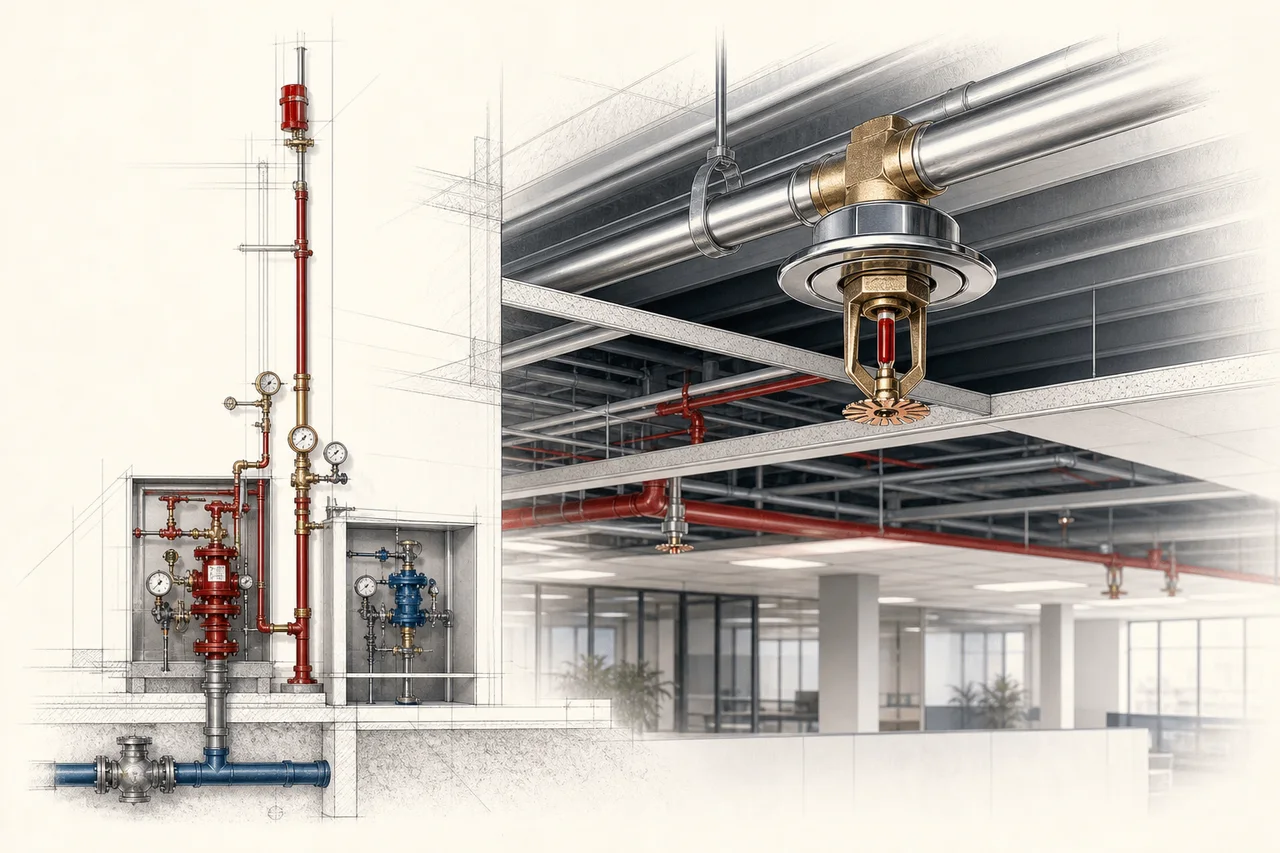
Automatic sprinklers apply water over a developing fire to help control it. Your choice of wet, dry, pre-action or deluge system depends on the space, freezing risk, sensitivity to water and expected fire behaviour. These arrangements serve different needs.
System snapshot
Key system characteristics
The same fields are used across every solution guide, making the systems easier to compare without reducing the decision to a single product.
Individual heat-operated sprinklers; deluge systems use separate detection
Water discharge and possible wetting of assets
Low, but obstructions and ceiling/storage geometry are critical
Water supply, valve position, pump and flow/alarm conditions
Corrosion, obstruction, changed storage, pumps, valves and painted/damaged heads
How the system works
Automatic sprinklers apply water over a developing fire to help control it. Your choice of wet, dry, pre-action or deluge system depends on the space, freezing risk, sensitivity to water and expected fire behaviour. These arrangements serve different needs.
Key selection considerations
- 01
Hazard classification: Hazard classification, storage commodity, height and arrangement drive density, area and sprinkler selection.
- 02
Pre-action systems: Pre-action limits accidental water admission to the pipe network but adds detection, releasing and valve complexity.
- 03
Dry systems: Dry systems address freezing but have air maintenance, corrosion and water-delivery-time considerations.
- 04
Water impact: Water damage is possible, but prompt sprinkler control often limits the much larger fire and firefighting water impact.
System anatomy
System components and approvals
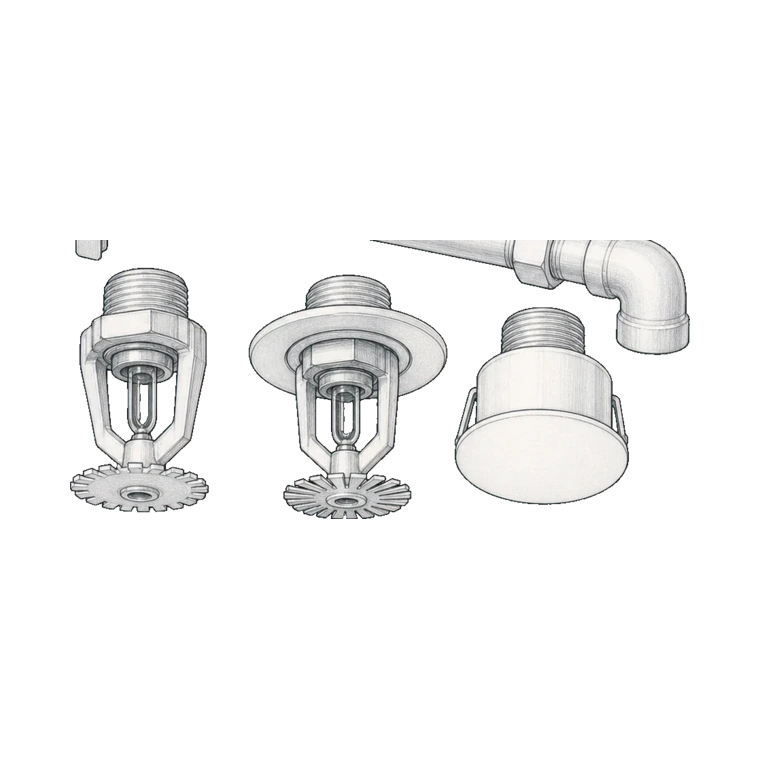
Sprinkler heads
Use listed/approved sprinklers of the specified type, temperature, response and K-factor.
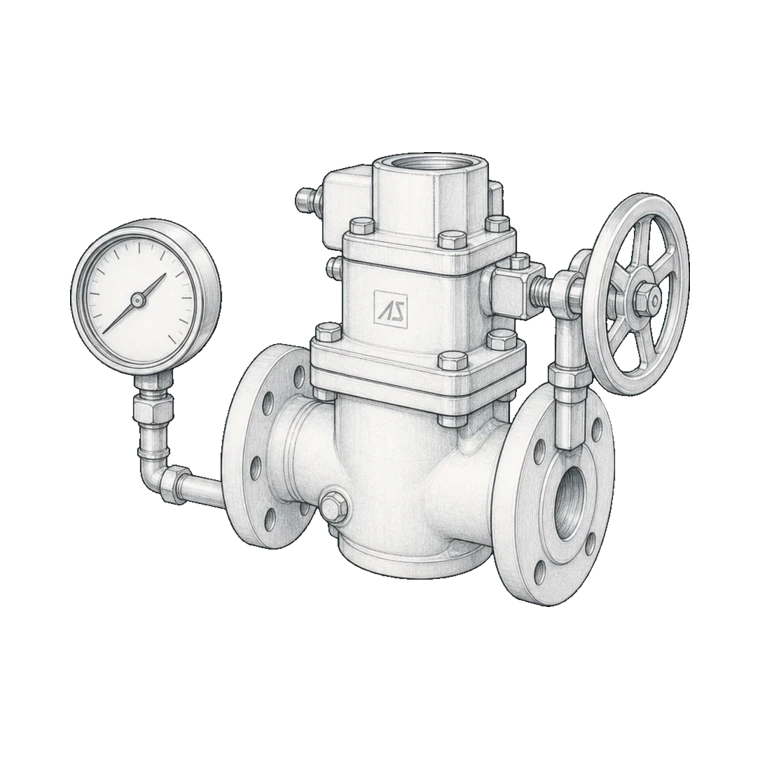
Alarm/check, dry, pre-action or deluge valves
Valves and trim should be approved for the system arrangement.
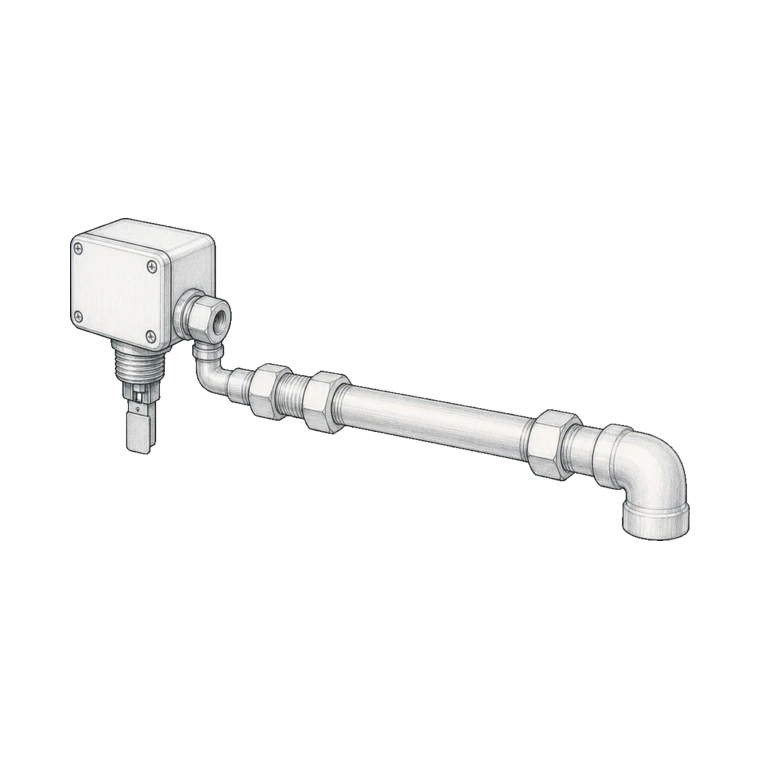
Pipework, fittings and hangers
Materials, joining, pressure rating, corrosion protection and support follow the adopted standard.
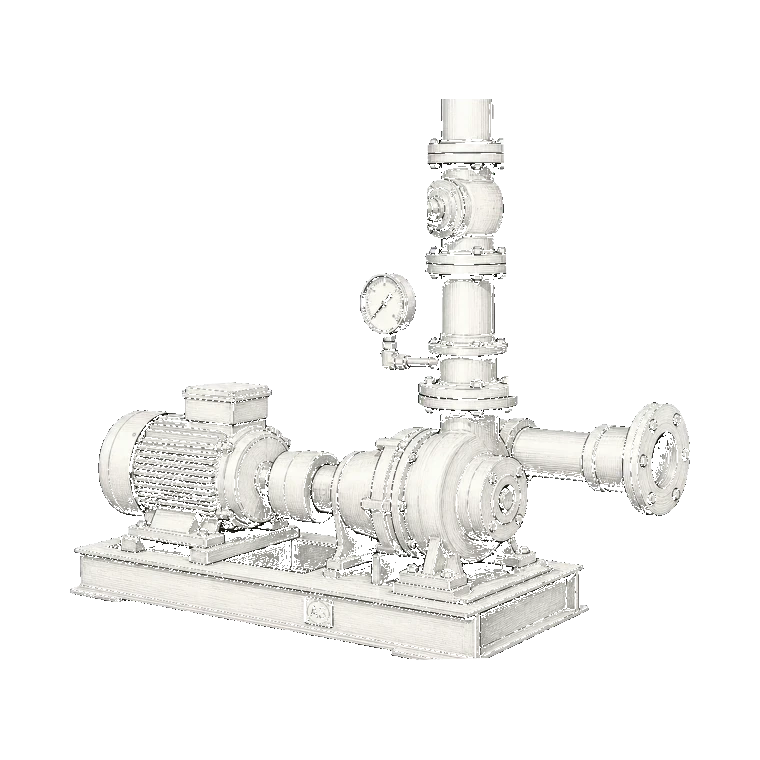
Fire pumps, tanks and water supplies
Capacity and reliability require acceptance testing; listed equipment may be specified.
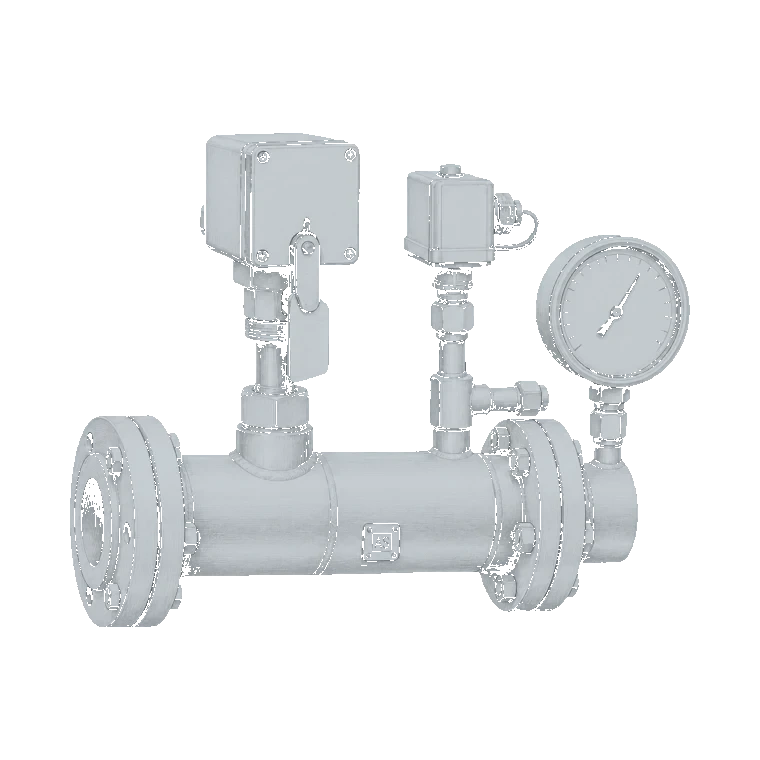
Flow, pressure and valve-supervisory switches
Use approved monitored devices compatible with the fire alarm interface.
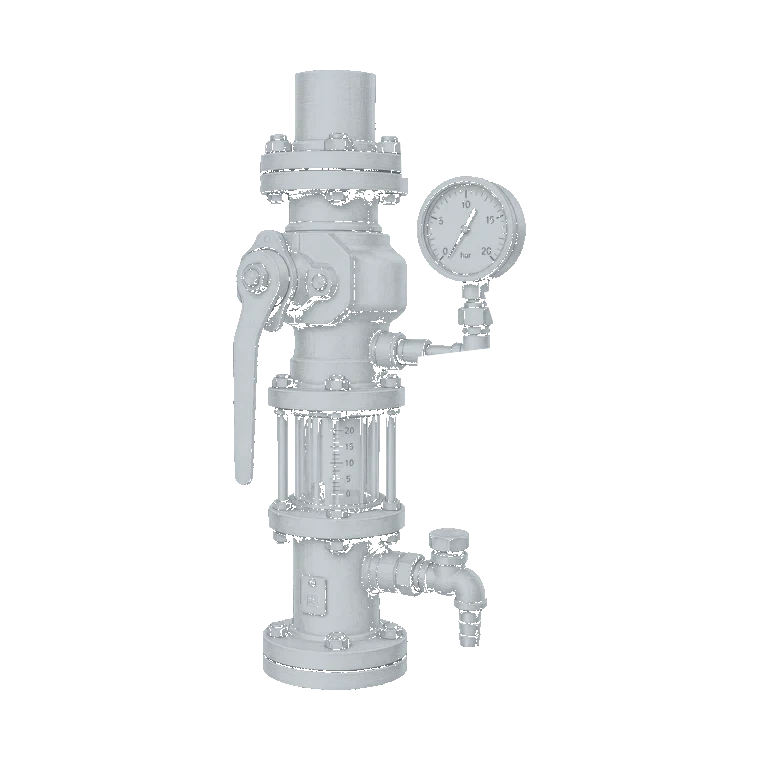
Test, drain and fire-service connections
Must be accessible and arranged for required flow and alarm tests.
Approval families
Typical approvals and certification requirements
- NFPA 13, EN 12845, local sprinkler rules or another adopted design standard
- UL, FM, LPCB, VdS or equivalent approved sprinklers, valves and critical equipment
- ISO 6182 product standards for relevant sprinkler components
- Local water authority, fire authority and insurer requirements
Governing rules
Codes, standards and project rules
- 01
NFPA 13 or the adopted local standard governs design and installation; NFPA 25 or local rules govern inspection, testing and maintenance.
- 02
Storage and occupancy changes require review because the original hydraulic design may no longer be adequate.
- 03
System impairments require notification, control measures and prompt restoration under the adopted code and site procedure.
Design information
Information needed to design and quote the system
Complete inputs reduce assumptions, expose interface risks early and make competing proposals meaningfully comparable.
- 01
Occupancy hazard or storage commodity, arrangement and maximum height
- 02
Building plans, ceiling/roof geometry, obstructions and temperature conditions
- 03
Water-supply flow test, tank and pump information
- 04
Design density/area, sprinkler type, K-factor and temperature rating
- 05
Hydraulic calculations, pipe materials, seismic and hanger requirements
- 06
Alarm interfaces, drainage, test access and impairment strategy
Inspection, testing and maintenance
Inspection, testing and maintenance requirements
Frequency and method must follow the adopted standard, authority conditions and manufacturer instructions. These recurring activities belong in the maintenance plan.
- 01
Inspect valves, gauges, heads, pipe condition, water supplies, pumps and obstructions at code-defined frequencies.
- 02
Test waterflow alarms, supervisory switches, main drains, pumps and required discharge or trip functions.
- 03
Investigate corrosion, microbiologically influenced corrosion, freezing, leakage and repeated pressure loss.
- 04
Review the design whenever occupancy, storage, partitions, ceilings or water supply change.
Mapped manufacturers
See all brands
Brands that support this solution
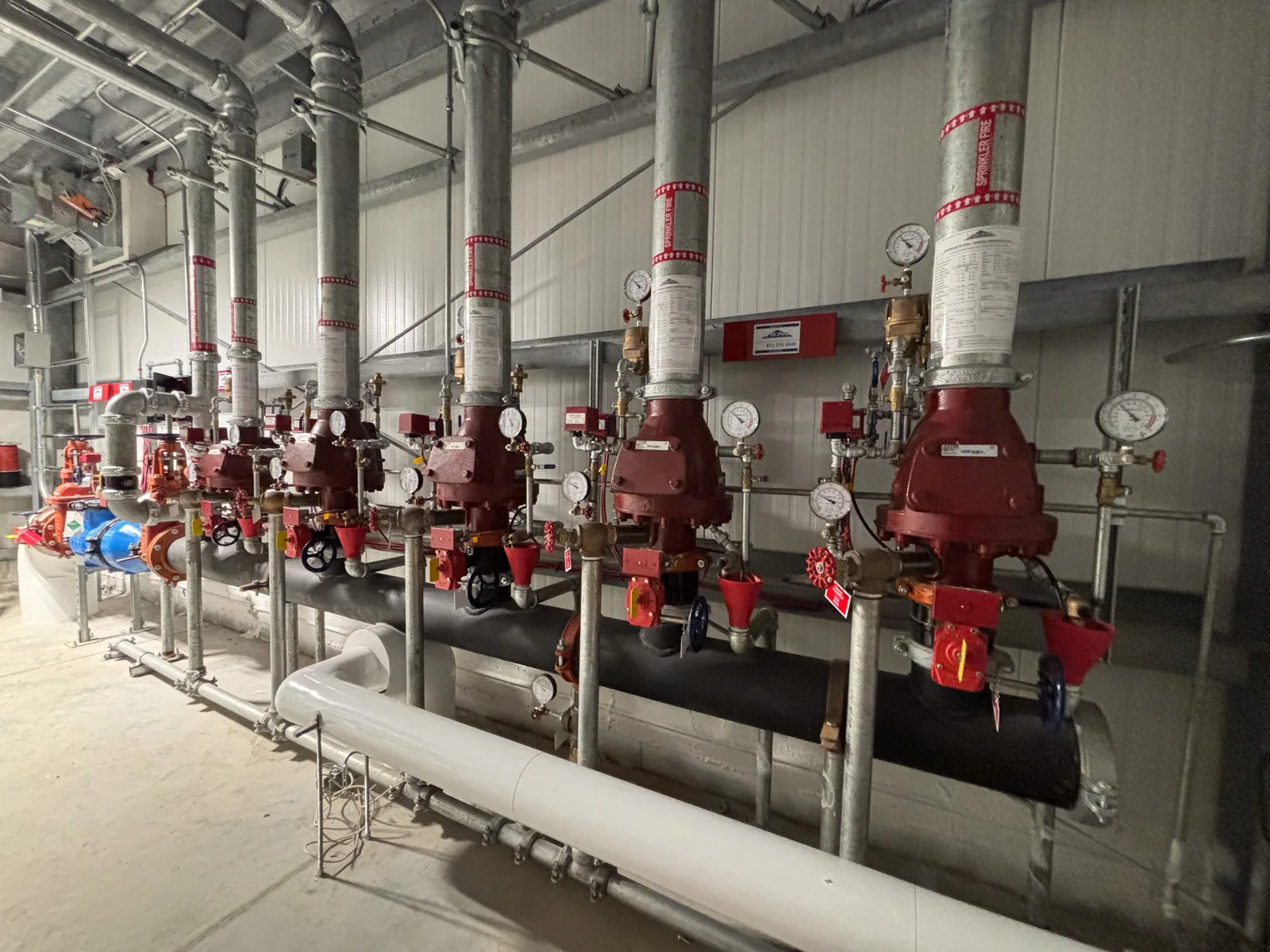
Viking
Viking for suppression and firefighting.
Tyco
Minerva marine detection and SIL2 configuration planning
Range, approval, territory and project suitability remain model-specific and are confirmed for each enquiry.
Delivery and lifecycle services
Services needed across the system lifecycle
Appointments, licences and authority requirements vary by country. We confirm what the service must include before work starts.
Solution designFire safety drawings, calculations, equipment schedules and approval documents for coordinated projects.
Land installationInstallation, integration, testing and handover of building and industrial fire safety systems.
Testing and commissioningDevice, circuit, interface and cause-and-effect testing with traceable commissioning records.
Statutory system testing and maintenanceScheduled inspection, testing, maintenance and defect reporting for installed fire safety systems.
System certification supportProduct, design, installation and test evidence prepared for authority, class or certification review.
TrainingPractical, system-specific training for operators, facilities teams, technicians and emergency responders.
Research basis
Standards and official references
These sources establish the system context. Verify the edition adopted by the project and the current certificate for the exact model.
Related knowledge
Knowledge base
Related technical guides
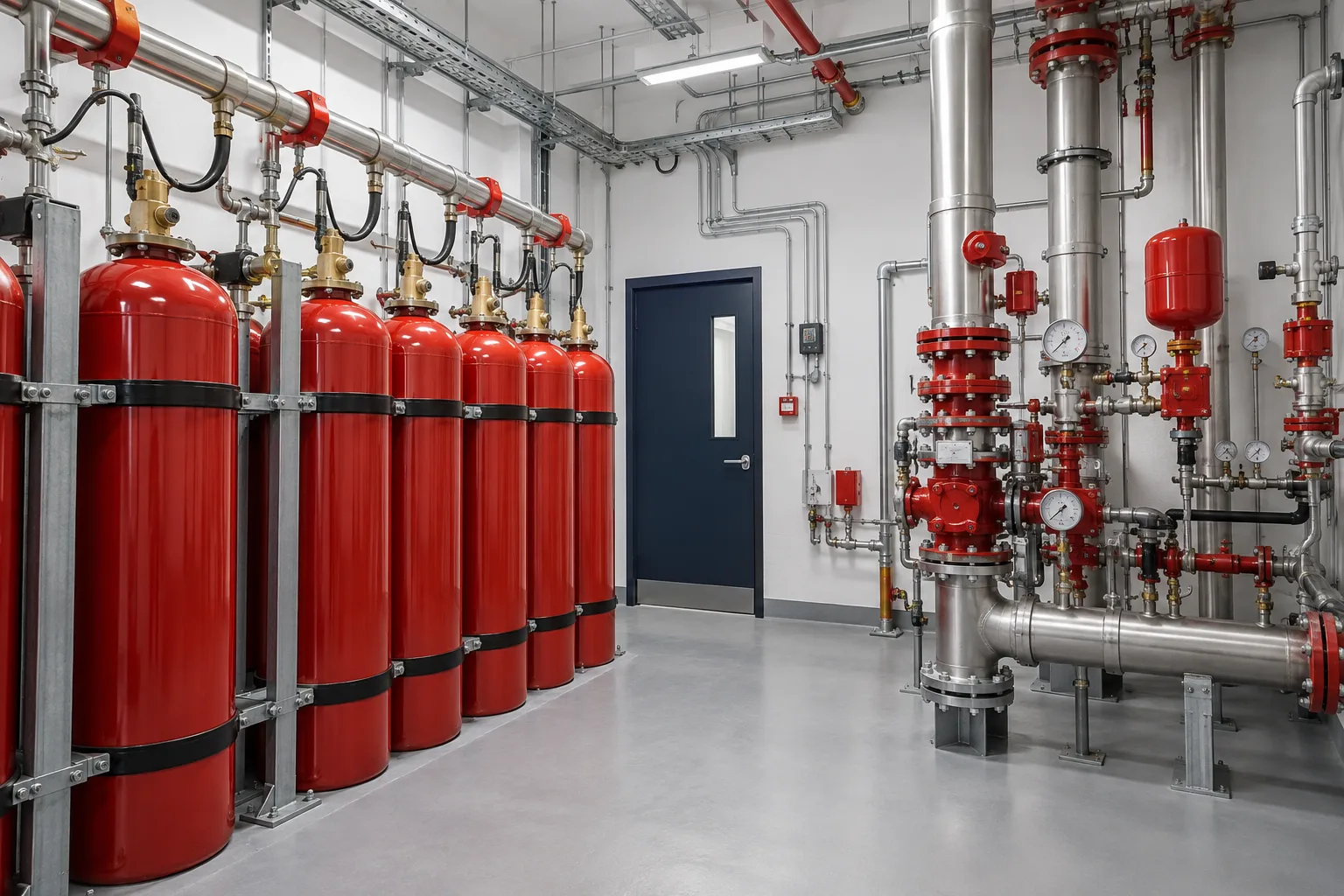
Choosing the right fire suppression system
Compare gas, aerosol, foam and water technologies.
Read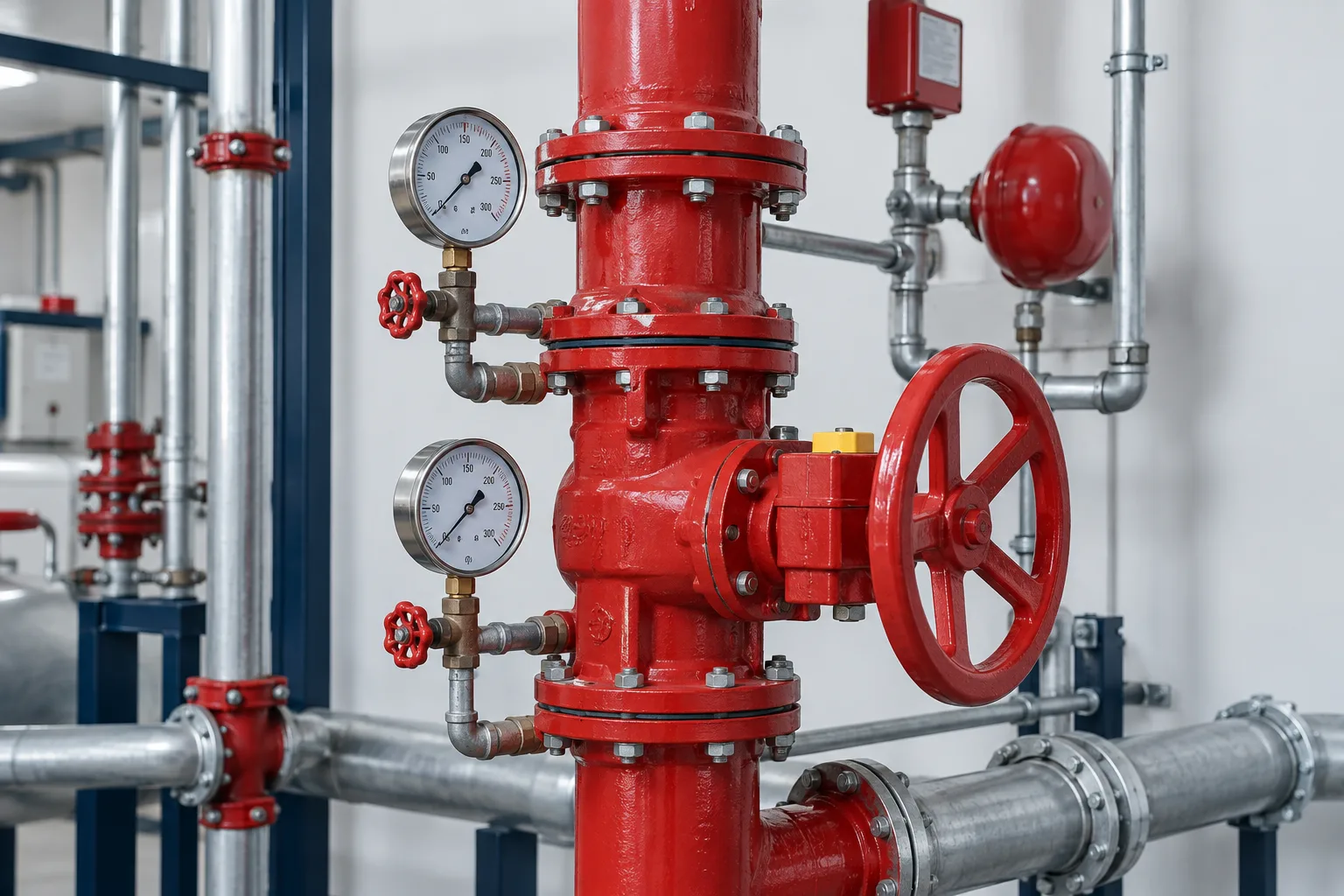
A practical guide to fire-system valves
Compare common valve functions, actuation, supervision and maintenance considerations.
Read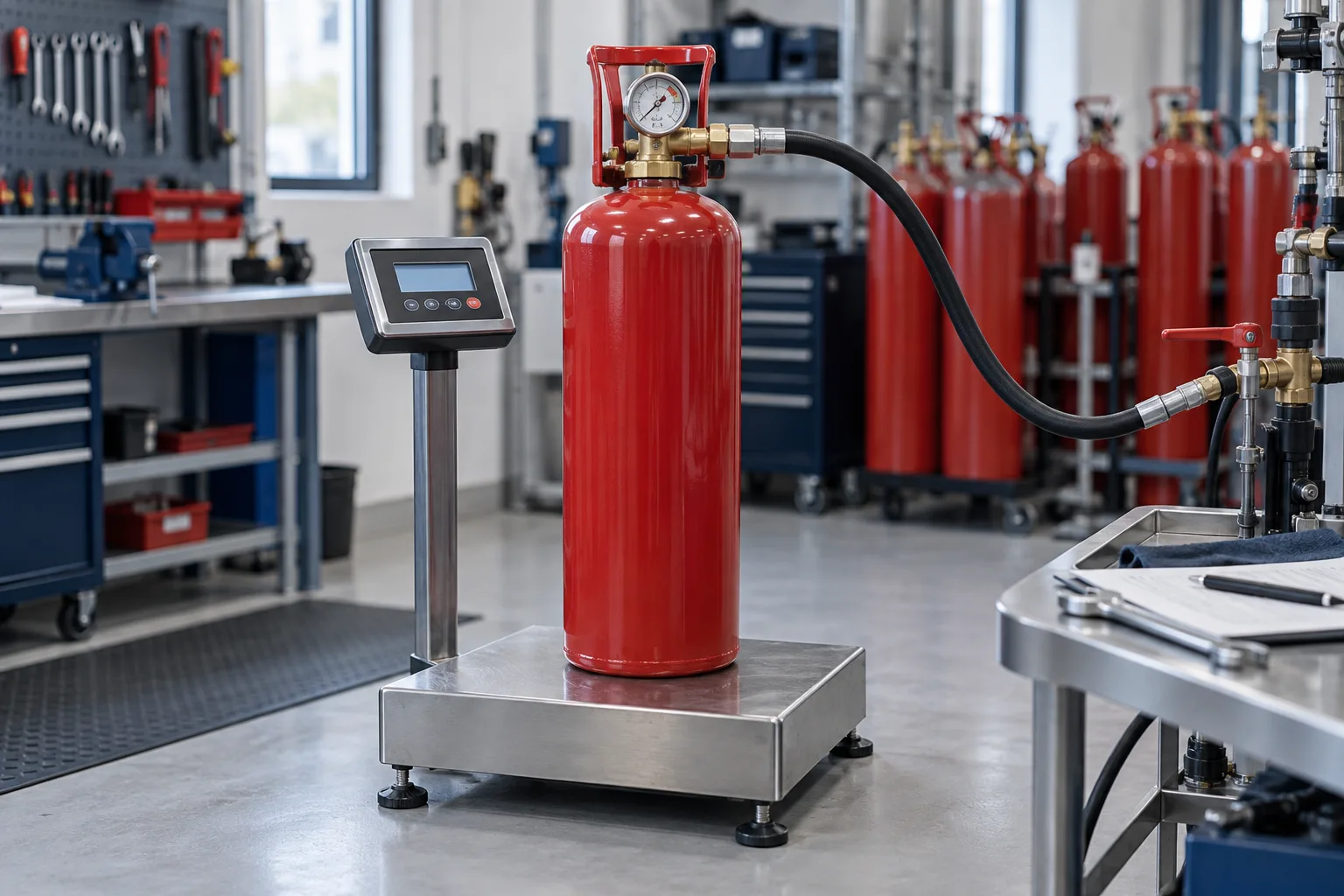
Planning a fire-suppression cylinder refill
Information to provide for CO₂, FM-200 and other supported clean-agent cylinders.
ReadCommon Questions
Frequently Asked Questions
Do all sprinklers activate at once?
Normally no. Standard automatic sprinklers operate individually when heated. Deluge systems are a different arrangement with open nozzles or sprinklers and a separate releasing system.
When is pre-action appropriate?
Where accidental water admission is a major concern and the added detection, valve, maintenance and acceptance complexity is justified.
Can storage be changed without redesign?
Not safely by assumption. Commodity, packaging, height, aisle and rack arrangement can materially change the required protection.