

Rapid total-flooding suppression without residue
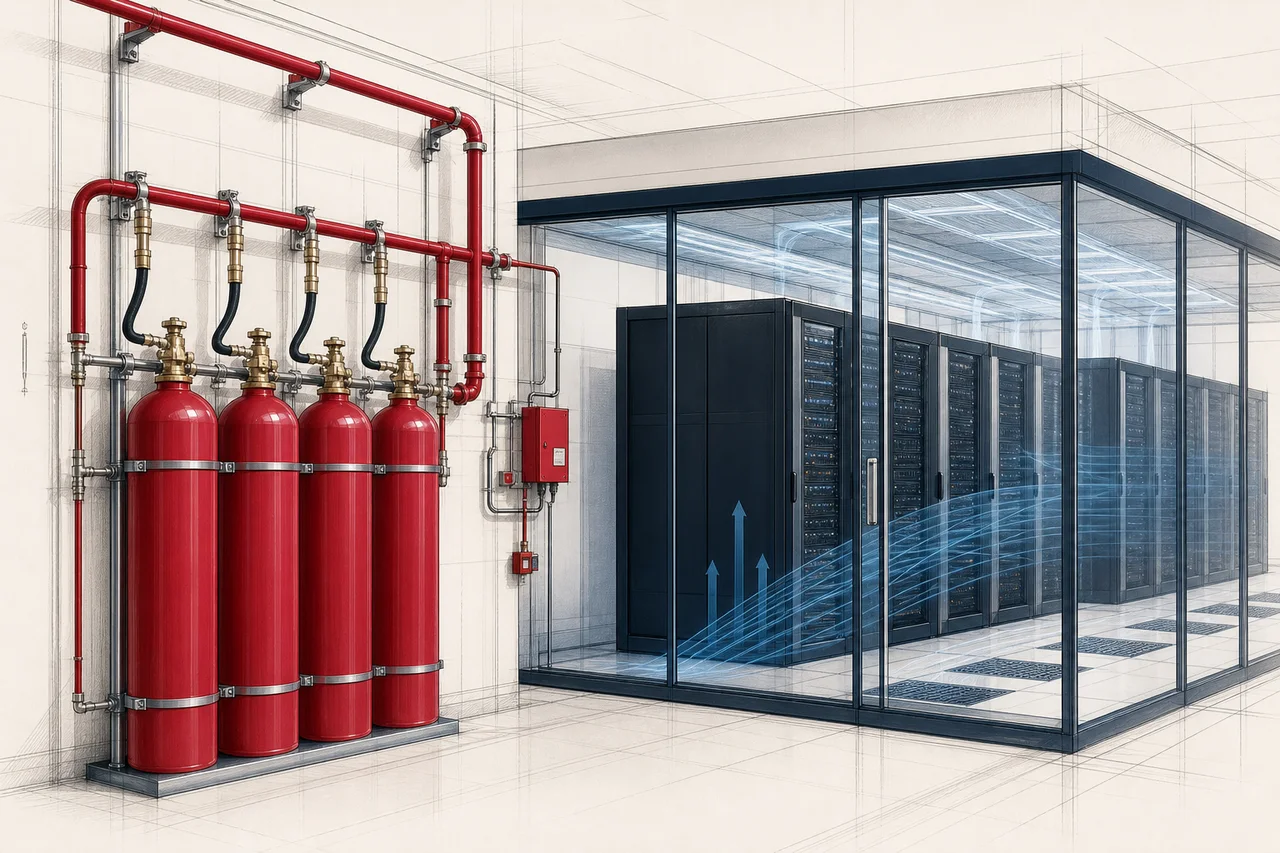
Sensitive asset protection
Gaseous clean-agent suppression
If you need to protect a data room, control room or archive without liquid or particulate residue, a gaseous clean-agent system may suit your space. It releases inert gas or halocarbon agent at a designed concentration. Your design also needs to account for enclosure leakage, people in the room and pressure changes.
System snapshot
Key system characteristics
The same fields are used across every solution guide, making the systems easier to compare without reducing the decision to a single product.
Normally automatic cross-zoned detection plus manual release
No water or particulate residue
High - concentration and hold time depend on room integrity
Release circuits, detection, cylinder pressure/weight and shutdowns
Cylinder tests, leakage, agent availability, enclosure changes and control obsolescence
How the system works
If you need to protect a data room, control room or archive without liquid or particulate residue, a gaseous clean-agent system may suit your space. It releases inert gas or halocarbon agent at a designed concentration. Your design also needs to account for enclosure leakage, people in the room and pressure changes.
Key selection considerations
- 01
Room integrity: Clean agents avoid water damage and residue but require a sufficiently tight enclosure to hold concentration.
- 02
Agent constraints: Inert gases need larger/high-pressure storage and can create significant pressure relief demand; halocarbons have agent-specific environmental and exposure limits.
- 03
Hidden volumes: Underfloor, ceiling void and connected-volume leakage must be included in room integrity and concentration calculations.
- 04
Operational recovery: Equipment cooling airflow and post-discharge ventilation need coordination so shutdown does not create a different operational risk.
System anatomy
System components and approvals
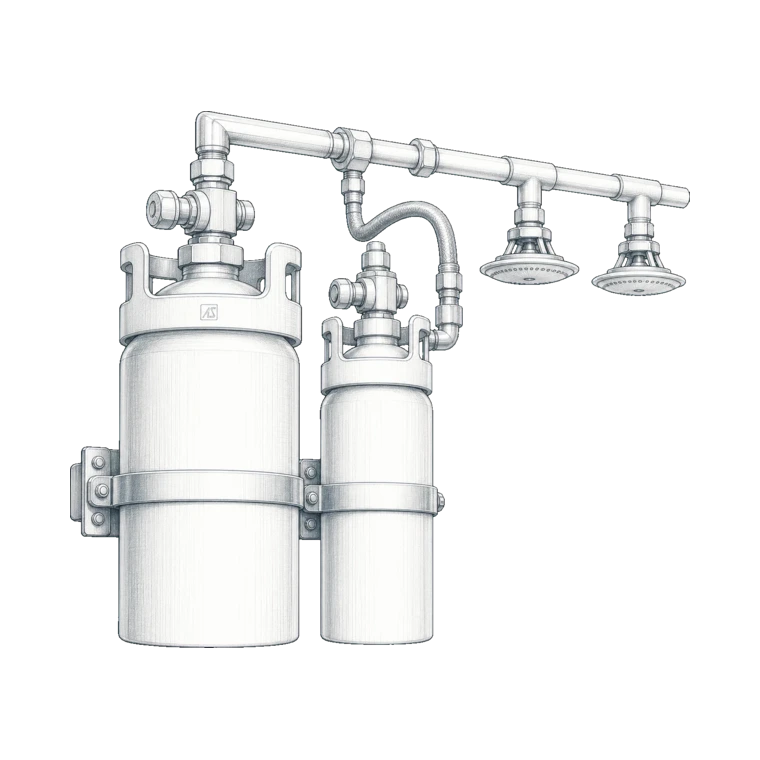
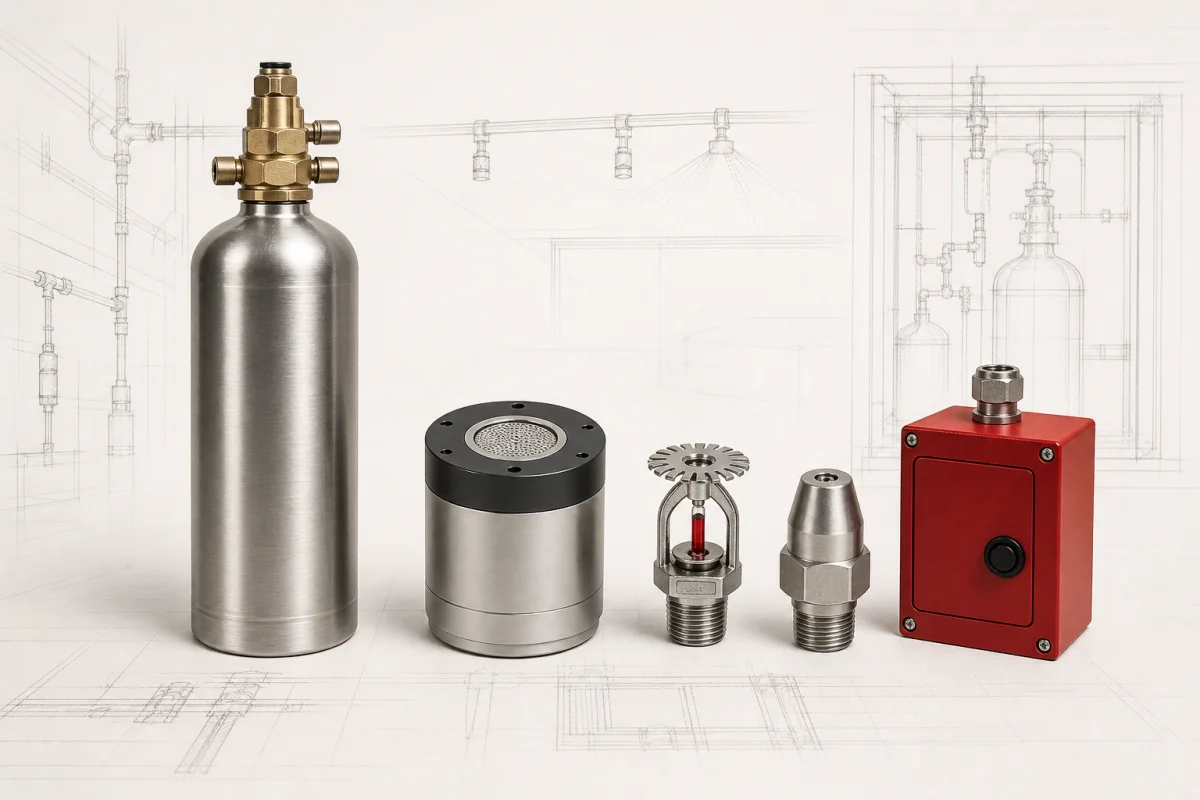
Agent cylinders and extinguishant
Use approved agent, fill, cylinder and valve combinations with current test status.
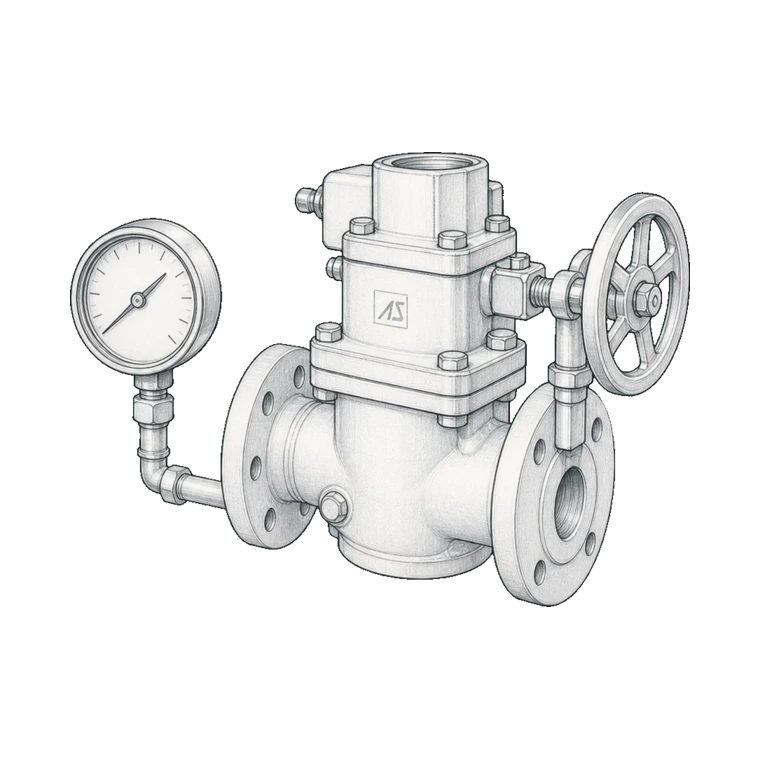
Valves, actuators, hoses and manifold
Must match the listed system and calculated pressure.
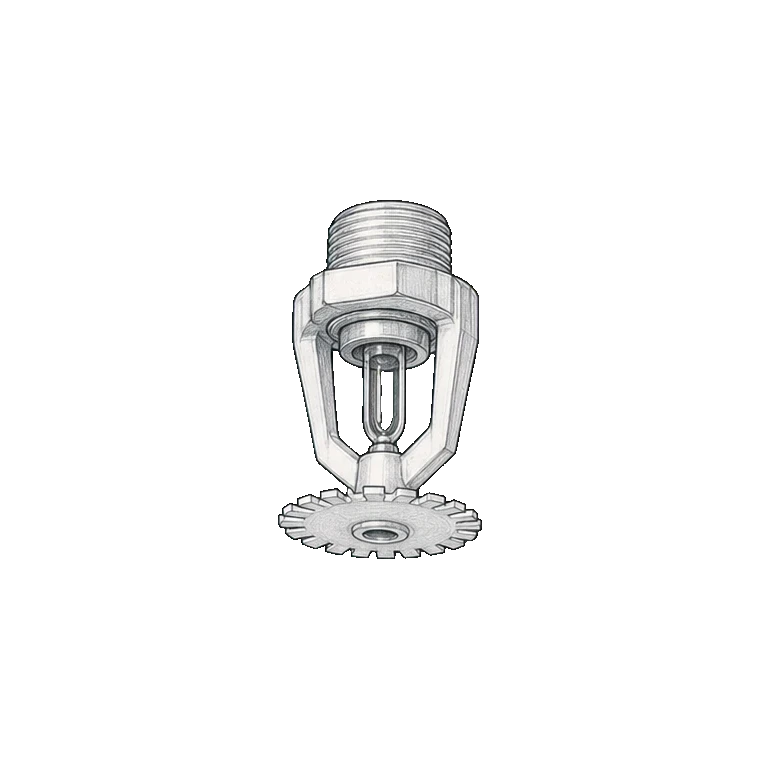
Pipework and discharge nozzles
Pipe size, orifice, pressure and nozzle location come from approved flow calculations.
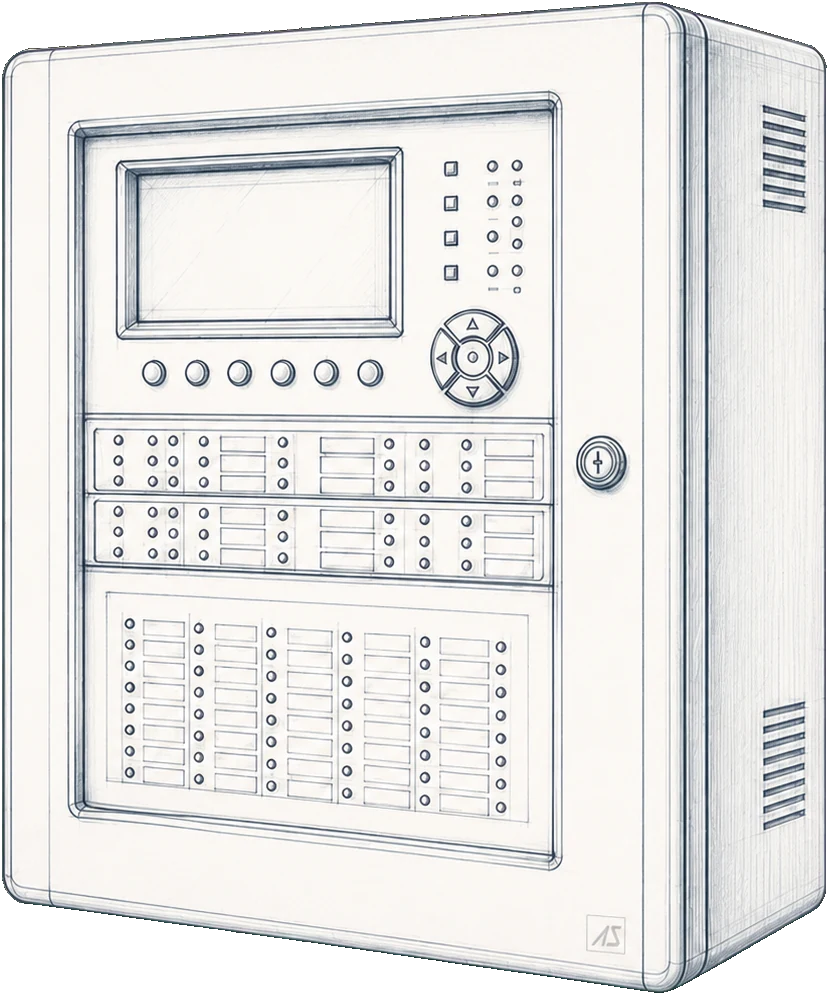
Detection and releasing panel
Use approved releasing control with coincidence, delay, manual release and monitored circuits as required.
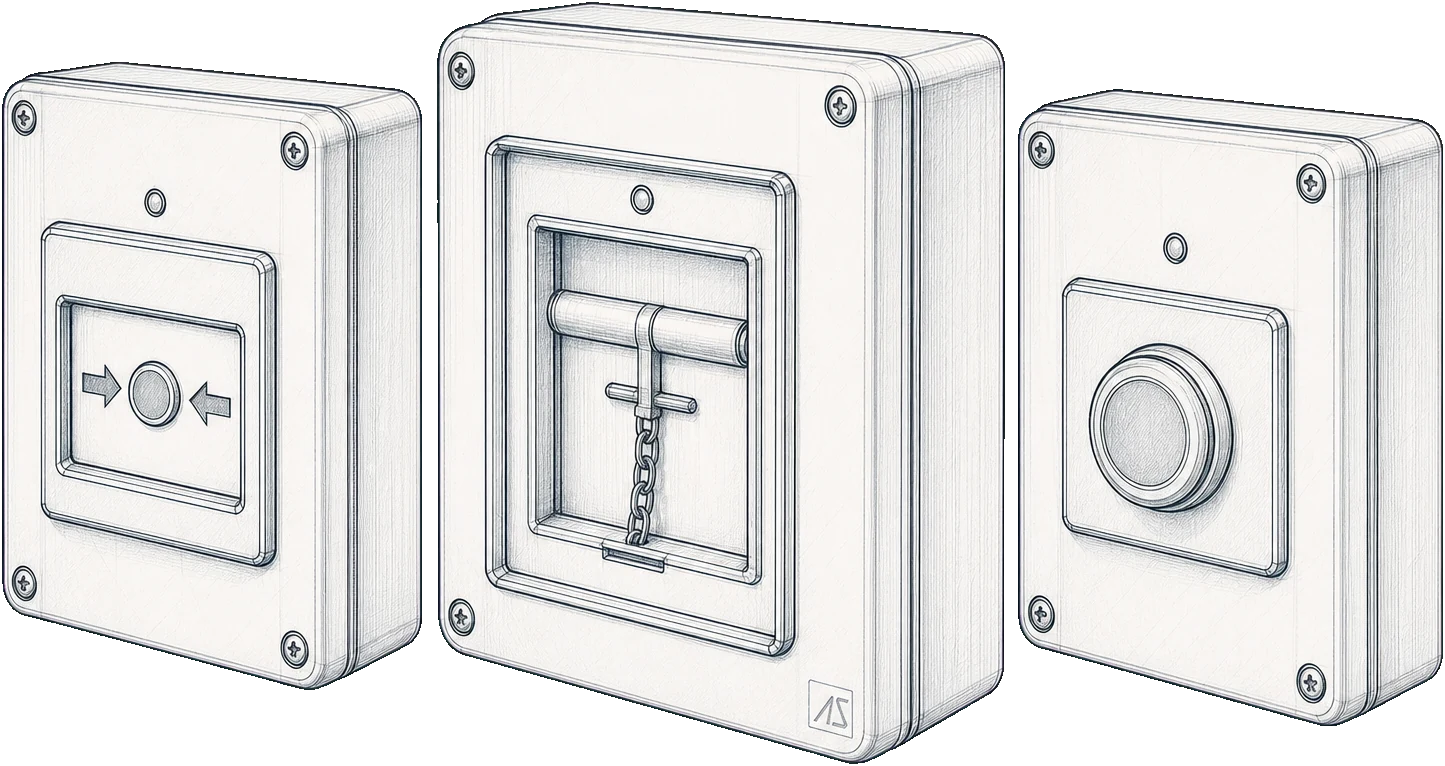
Warning, abort and manual controls
Arrangement follows the adopted standard, occupancy and authority requirements.
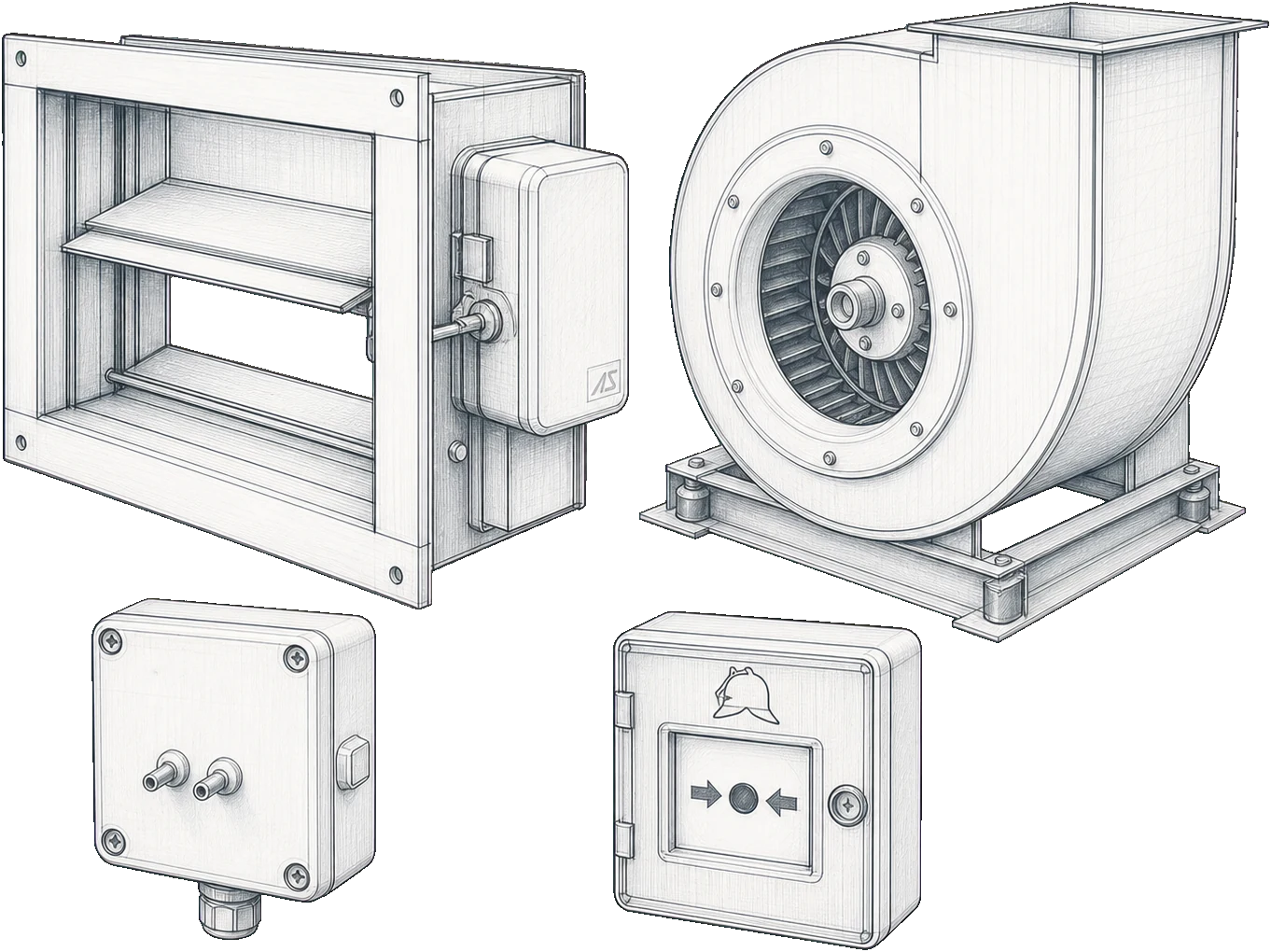
Pressure-relief vent and room interfaces
Vent size/direction, HVAC shutdown, dampers and door closure are engineered parts of the system.
Approval families
Typical approvals and certification requirements
- ISO 14520, NFPA 2001, EN 15004 or the locally adopted gaseous-system standard
- UL, FM, LPCB, VdS or other approval for the complete agent/system combination
- Pressure-equipment, cylinder, valve and transport compliance
- Environmental and agent-use restrictions applicable in the project market
Governing rules
Codes, standards and project rules
- 01
The selected design standard governs concentration, safety factor, exposure, discharge time, hold time, pipe calculation and warning controls.
- 02
An enclosure integrity test is commonly required for total-flooding systems and should be repeated after material enclosure changes.
- 03
Agent use can be affected by environmental regulation and market availability; verify current restrictions before specification.
Design information
Information needed to design and quote the system
Complete inputs reduce assumptions, expose interface risks early and make competing proposals meaningfully comparable.
- 01
Agent choice, fire class, minimum design concentration and occupancy
- 02
Room and void volumes, maximum/minimum temperature and altitude
- 03
Enclosure leakage, hold time and pressure-relief calculation
- 04
Cylinder location, pipe route, nozzle layout and flow calculation
- 05
Detection, coincidence, delay, abort, warning and manual release
- 06
HVAC, dampers, doors, power shutdown and post-discharge recovery
Inspection, testing and maintenance
Inspection, testing and maintenance requirements
Frequency and method must follow the adopted standard, authority conditions and manufacturer instructions. These recurring activities belong in the maintenance plan.
- 01
Check cylinder pressure or weight, valves, actuators, hoses, pipework, nozzles and physical condition.
- 02
Functionally test the full releasing sequence without discharge, including alarms, delay, abort, shutdowns and monitored faults.
- 03
Recheck enclosure integrity after changes to doors, penetrations, ceilings, floors or ventilation.
- 04
Complete cylinder inspection/hydrotest and agent handling at the intervals required by the vessel, system listing and local law.
Mapped manufacturers
See all brands
Brands that support this solution
Kidde
Kidde for fire detection and control.
Tyco
Minerva marine detection and SIL2 configuration planning
Range, approval, territory and project suitability remain model-specific and are confirmed for each enquiry.
Delivery and lifecycle services
Services needed across the system lifecycle
Appointments, licences and authority requirements vary by country. We confirm what the service must include before work starts.
Solution designFire safety drawings, calculations, equipment schedules and approval documents for coordinated projects.
Land installationInstallation, integration, testing and handover of building and industrial fire safety systems.
Marine installationMarine fire-system installation and replacement with flag, class and vessel requirements addressed.
Testing and commissioningDevice, circuit, interface and cause-and-effect testing with traceable commissioning records.
Statutory system testing and maintenanceScheduled inspection, testing, maintenance and defect reporting for installed fire safety systems.
System certification supportProduct, design, installation and test evidence prepared for authority, class or certification review.
Cylinder refillSuppression-cylinder identification, inspection, testing, refill and documented reinstatement.
TrainingPractical, system-specific training for operators, facilities teams, technicians and emergency responders.
Research basis
Standards and official references
These sources establish the system context. Verify the edition adopted by the project and the current certificate for the exact model.
Related knowledge
Knowledge base
Related technical guides
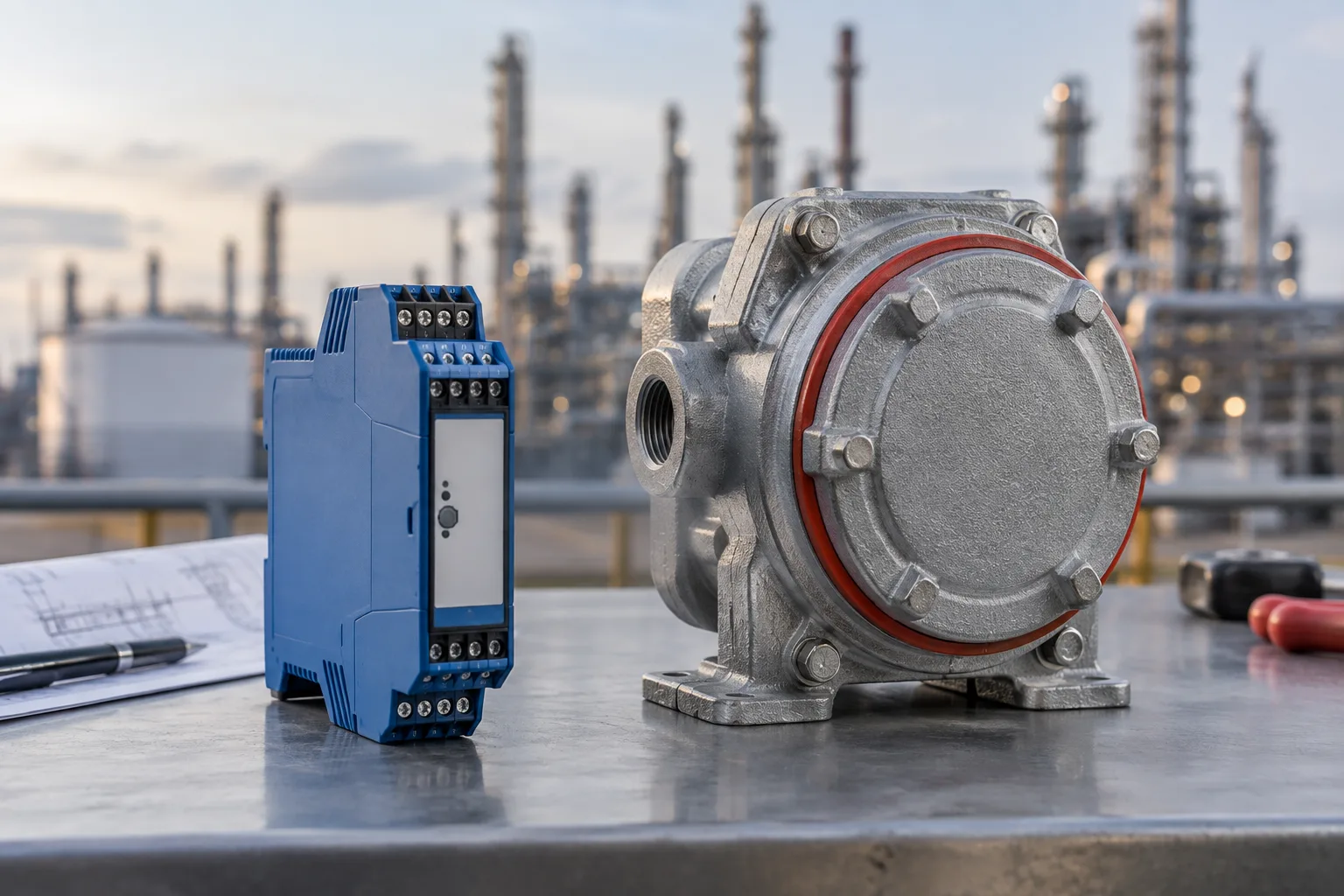
Intrinsically safe vs explosion-proof protection
Separate IS and Ex protection concepts, labels and application limits.
Read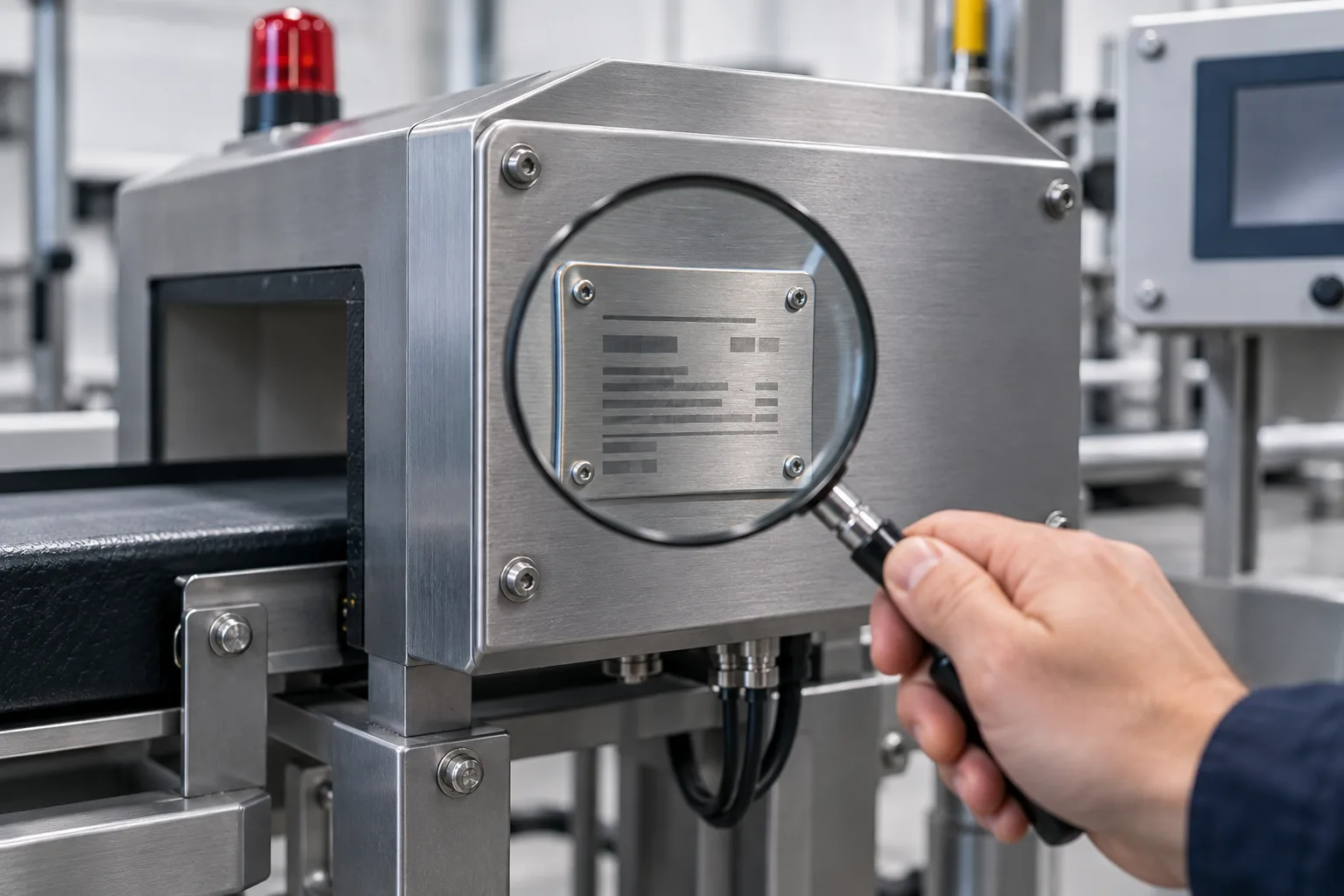
How to read an Ex label
A part-by-part orientation to common IECEx and ATEX equipment markings.
Read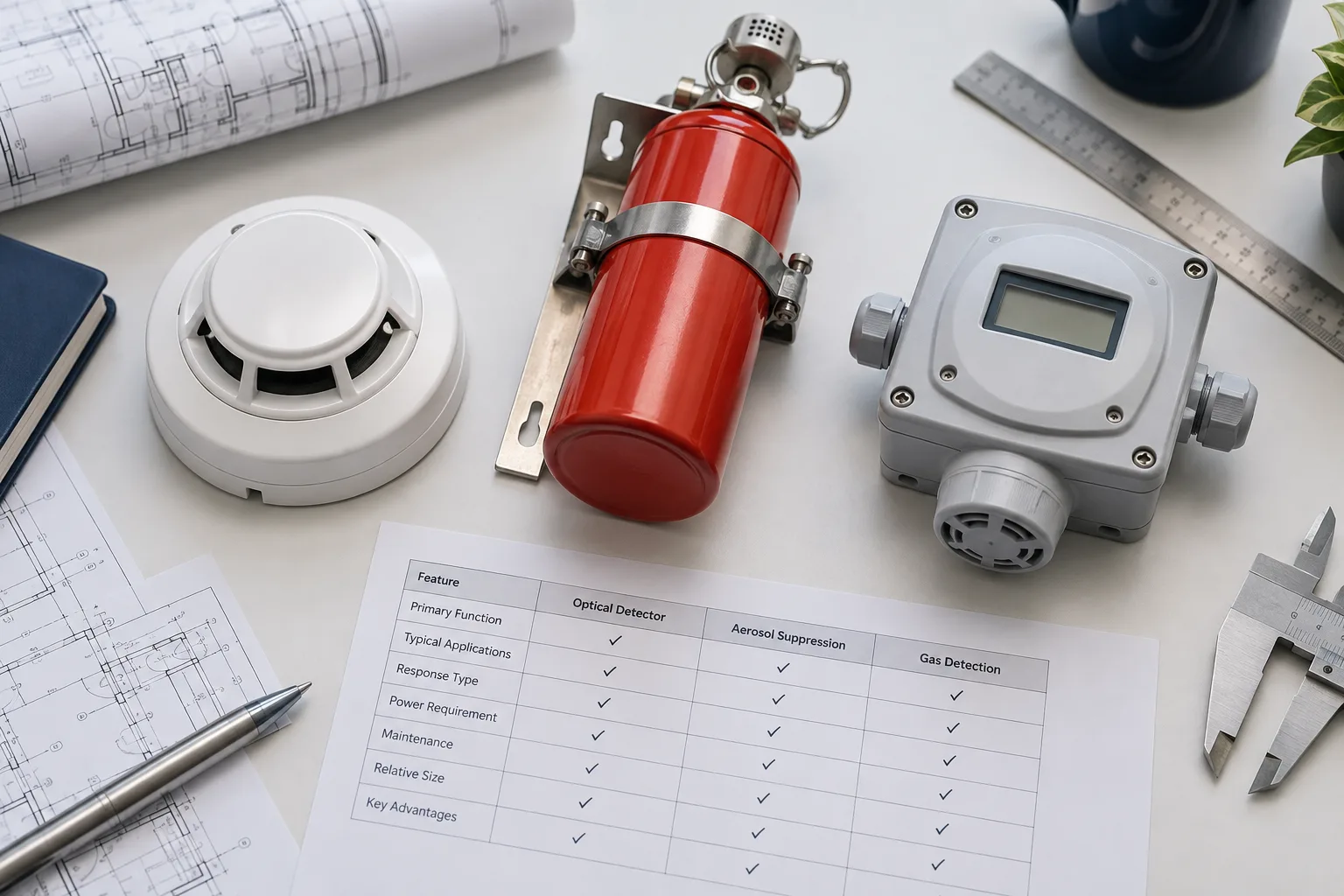
How we compare fire safety solutions
Compare fire safety systems for your building, from product approvals and installation to maintenance and cost.
ReadCommon Questions
Frequently Asked Questions
Why are clean agents used in data centres?
They suppress without wetting electronics or leaving residue, while water-based protection may still be required by code. Room integrity and equipment shutdown/recovery remain important.
What is a room integrity test?
A fan test estimates enclosure leakage and whether the design concentration can be retained for the required hold time.
Can cylinders be moved farther from the room?
Only if an approved recalculation confirms pipe pressure, flow, discharge time and nozzle performance for the new arrangement.